



Prado Museum

The Third of May 1808 tickets

Included with Prado Museum tickets

Timings

RECOMMENDED DURATION

2 hours
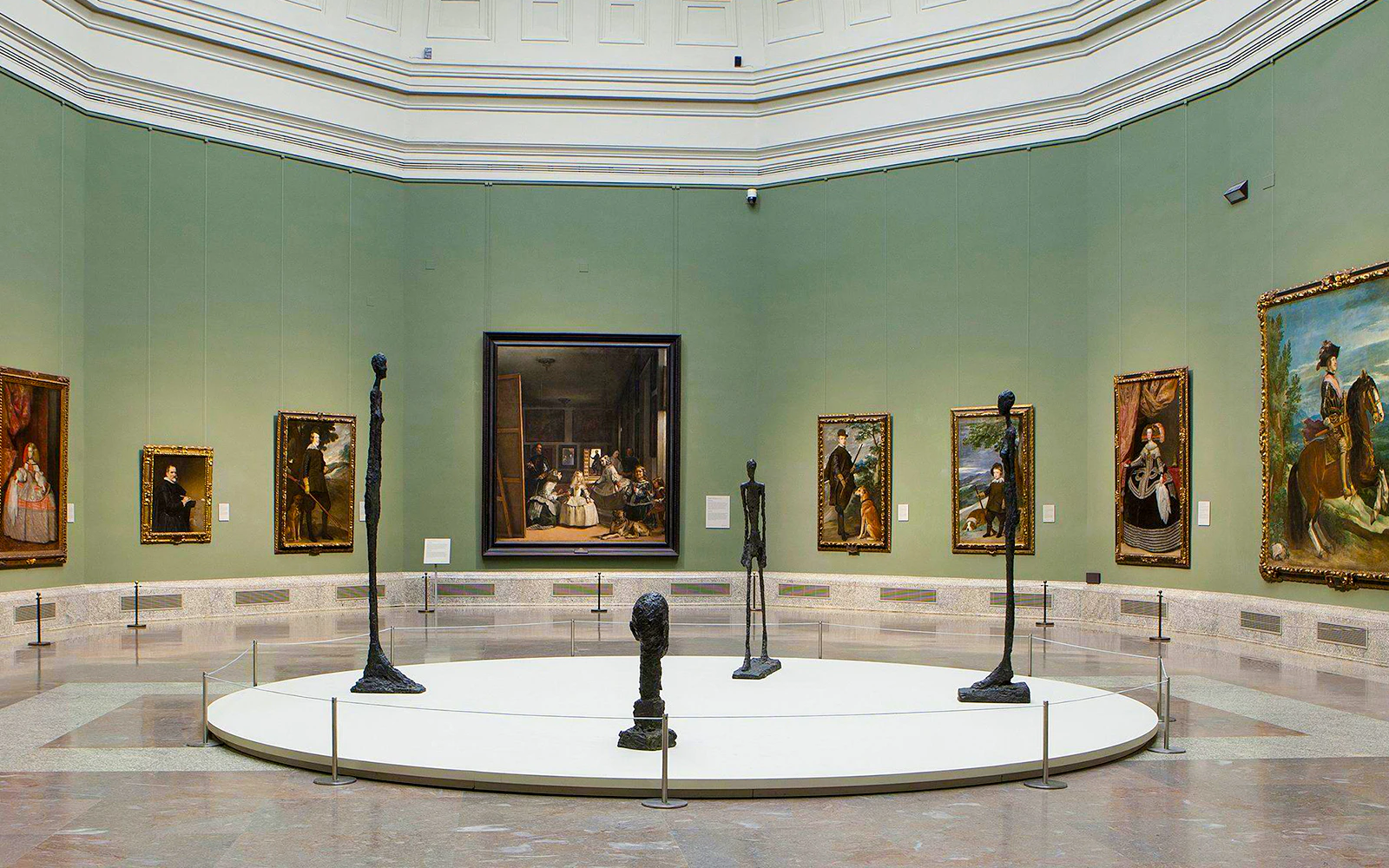
The Third of May 1808 at Prado Museum

Top things to do in Madrid

Quick overview
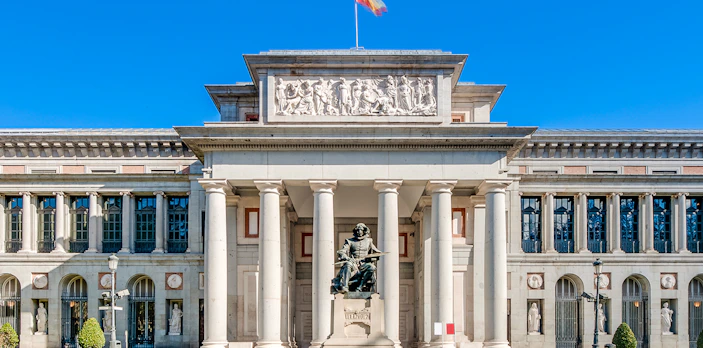
  • Access: Included in all Prado Museum tickets
  • Separate ticket: Not required
  • When you’ll see it: Midway through a Prado highlights visit, in the Goya galleries on Level 0
  • Visit duration: 10–15 min self-guided / 15–20 min with guide
  • Best time: First entry slot on a weekday; the Goya rooms are calmer before late-morning tour groups arrive
  • Restrictions: Photography is prohibited throughout the museum

The Third of May 1808 is included with all Prado Museum tickets. No separate ticket is needed. You’ll usually reach it within the first part of a focused Prado visit, in the ground-floor Goya galleries, and you can head there directly once inside. Book timed entry with an Audioguide or guided tour if this painting is a priority, because context changes what you notice in front of it.

How to best experience The Third of May 1808

Best time to visit

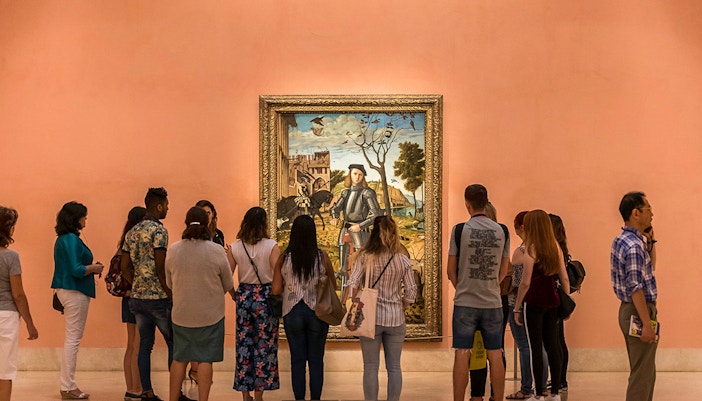
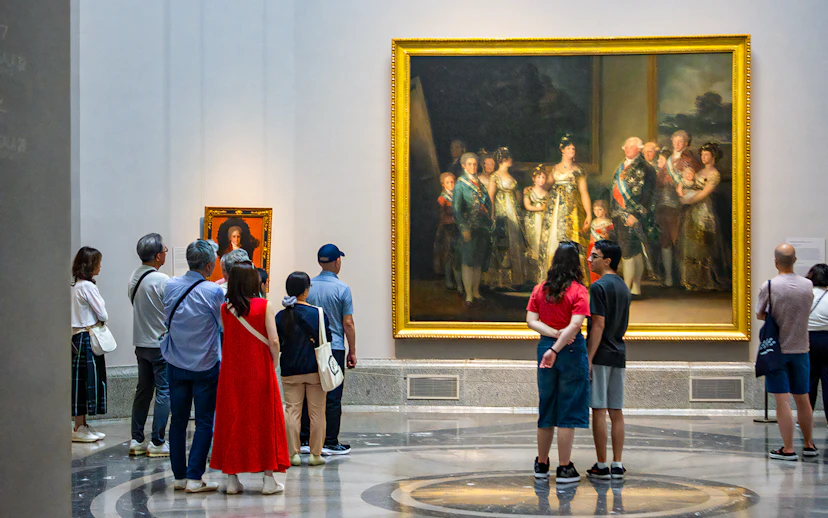
Aim for the first weekday slot or the last 90 minutes before closing. Midday brings school groups and highlights tours, so space in front of the canvas goes fast. If you want room to compare faces, gestures, and light, don’t choose noon.

How long to spend

Give it 10–15 minutes on your own or 15–20 minutes with a guide. From a distance, you grasp the drama quickly; up close, the lantern, brushwork, and faces take longer. If you rush, it becomes only a famous image, not a fully read painting.

Where it fits in your itinerary

Put it into your first 60–90 minutes if Goya is your main reason for visiting. The Prado rewards concentration, but attention drops after too many rooms. See this before museum fatigue sets in, or you’ll catch the headline scene and miss the quieter structure.

Crowd patterns

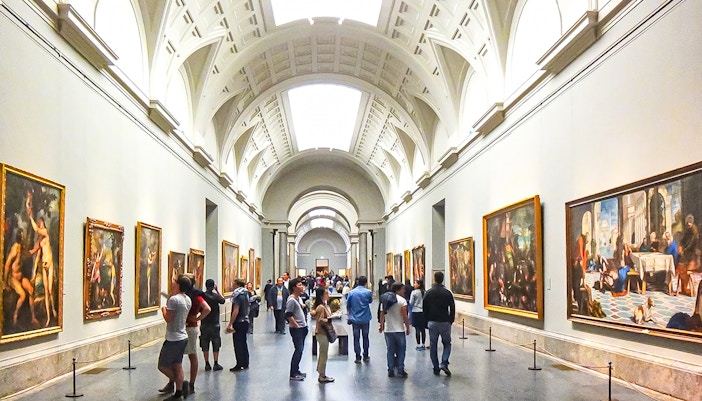
The Goya rooms are busiest from about 11am–2pm, when many guided routes converge on the museum’s best-known Spanish works. Early and late slots feel looser and quieter. If the doorway is crowded, wait 5 minutes instead of forcing a rushed view from the side.

What to prioritize if time is short

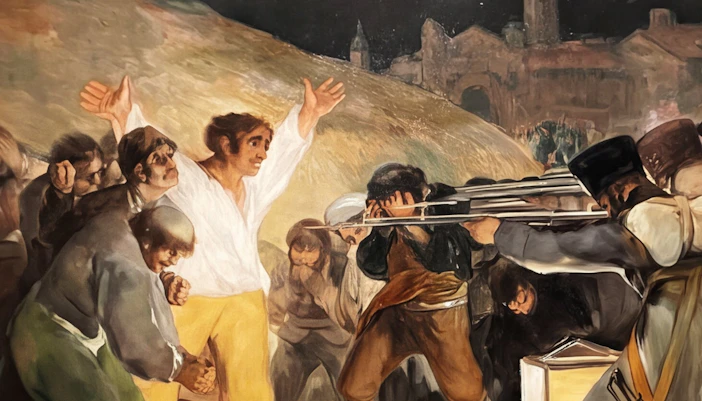
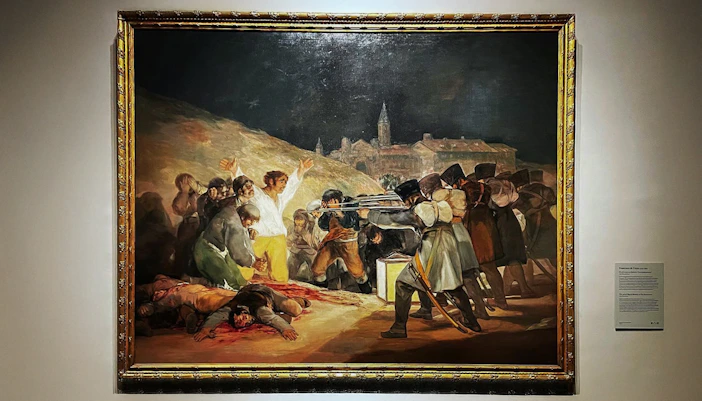
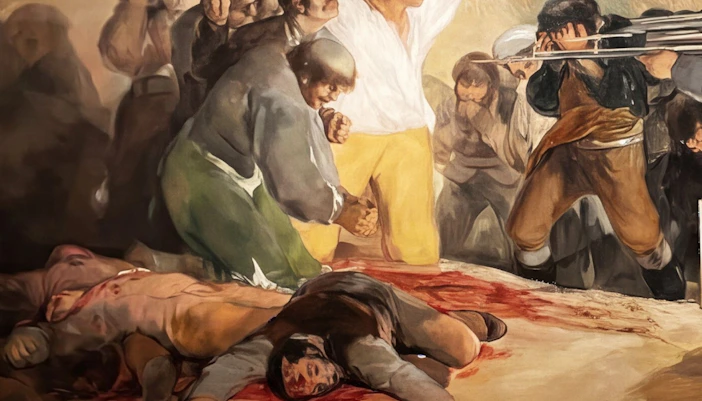
Start with the central man in white, then trace the rifles on the right, and finish with the bodies at the lower left. After that, look at the lantern near the soldiers’ feet. Those elements explain the painting’s full moral argument in under 10 minutes.

Common mistakes to avoid

Most visitors stand too close and read only the central figure. Step back first to understand the whole composition, then move in for faces and paint handling. Also, don’t rely on taking reference photos later—the Prado’s no-photography rule is enforced.

Best tickets to experience The Third of May 1808

Ticket typeWhy choose it

Timed entry

Best if you want direct access to the Goya rooms and the freedom to linger at your own pace.

Audioguide

Useful if you want symbolism and history explained without joining a group or changing your route.

Guided tour

Best for first-time Prado visitors who want a fast route, expert context, and stronger links between Goya’s major works.

Why it’s worth seeing

Few works in the Prado reject heroic war painting as completely as this one: Goya turns an execution into an accusation. Most visitors notice the raised arms first, but the firing squad’s faces are hidden on purpose, making violence look mechanical rather than personal. Use the details below to read the painting from center to edge, because its force grows the longer you stay with it.

The central figure

Stand slightly back and look at the man in white before anything else. His spread arms echo religious imagery, but his terrified face keeps the scene human rather than abstract. The blood on his hand blocks any comfortable reading of noble sacrifice.

The firing squad

Move your eyes to the right edge and follow the rigid line of rifles. Goya paints the soldiers as a block of backs, hats, and weapons instead of individuals. That anonymity matters: violence here feels organized, efficient, and almost machine-like.

The lantern and bodies

Now look down at the lantern near the soldiers’ feet and the corpses in the foreground. The artificial light exposes the living and dead alike, turning the hillside into a stage. It also tells you the next execution is already underway.

Painted in 1814 after Napoleon’s occupation of Spain and the reprisals that followed the Madrid uprising, this work broke from traditional battle painting by centering civilian terror instead of military glory. Goya made state violence, fear, and anonymity the subject, which is why the canvas is often treated as a starting point for modern anti-war art. Today it remains one of the Prado’s defining Goya works and a key lens for reading war imagery in museums.

👉 Explore the full history of the Prado Museum

Notable figures

Francisco de Goya | Artist

Painted the work in 1814, turning an execution scene into one of art’s clearest anti-war statements.

View Wikipedia

Joachim Murat | French commander

Led French forces in Madrid during the uprising and reprisals that shaped the painting’s subject.

View Wikipedia

Ferdinand VII | Restored monarch

Returned to the Spanish throne in 1814, when Goya produced national resistance paintings for the restored order.

View Wikipedia

Know before you go

  • Open: Monday–Saturday, 10am–8pm; Sundays and holidays, 10am–7pm
  • Last entry: 30 minutes before closing
  • Closed: January 1, May 1, and December 25
  • Free entry: Monday–Saturday, 6pm–8pm; Sundays and holidays, 5pm–7pm
  • Official info: Check current hours before visiting: https://www.museodelprado.es
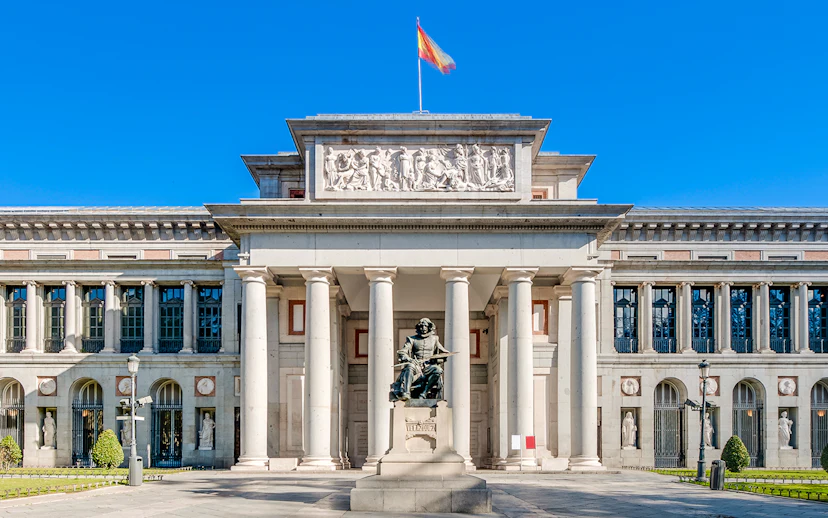
  • Address: Museo Nacional del Prado, Calle de Ruiz de Alarcón 23, 28014 Madrid (Google Maps: ‘Museo Nacional del Prado’)
  • Nearest metro: Banco de España or Estación del Arte; allow about 10–15 minutes on foot
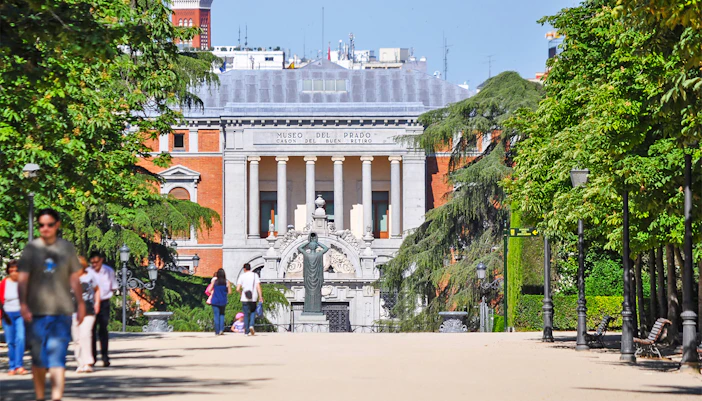
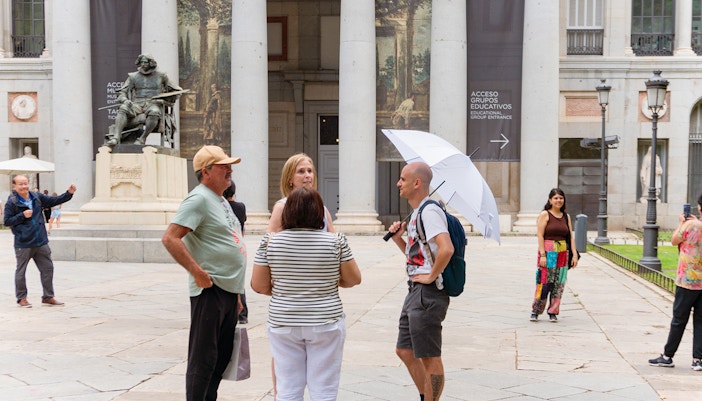
  • Entry point: Use the entrance shown on your ticket; timed visitors are commonly directed through the Jerónimos access
  • Painting location: Goya galleries on Level 0 in the Villanueva Building
  • Direct access: Yes; the Prado does not force a single route, so you can head straight to the Goya rooms once inside
  • Wheelchair access: Yes; the museum is wheelchair and stroller accessible
  • Accessible infrastructure: Elevators, ramps, platforms, and accessible restrooms are available
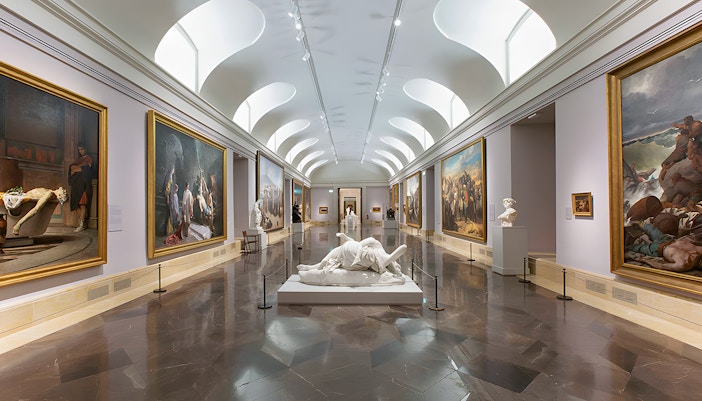
  • Gallery access: The Level 0 Goya rooms are flat and easy to navigate once reached
  • Visual support: Accessible maps and audio signage are available, and Audioguide options can help with wayfinding
  • Hearing and mobility support: Hearing loops are available at the auditorium and counters, wheelchairs are loaned free of charge, and guide dogs are welcome with relevant documentation
  • Photography: Prohibited throughout the museum, including in front of this painting
  • Food and drink: Not allowed inside the galleries
  • Large items: Lockers and cloakroom facilities are available, and staff may require oversized items to be deposited
  • Conduct: Keep voices low and avoid blocking the doorway or the viewing line in busy rooms
  • Room changes: Some sections may close at short notice, so ask staff if a Goya gallery is temporarily unavailable

FAQs

Yes. Entry to this painting is included with every valid Prado Museum ticket. No separate ticket exists.

More reads

Prado Museum tickets, highlights, and visitor planning guide

[Link to main Prado Museum LP]

Goya at the Prado: key works beyond this canvas

[Link to related Goya shoulder page]

How to plan a 2-hour Prado masterpiece route

[Link to related Prado planning page]