Santiago Bernabéu believed Real Madrid needed a bigger, more modern home after the Spanish Civil War. Building such a stadium in austere times was a bold statement of intent, and it gave the club room to grow.
Santiago Bernabéu Stadium history
Few stadiums feel this charged with memory: opened in 1947 and now reborn with a futuristic shell, the Bernabéu lets you trace Real Madrid’s rise through its museum, tunnel, and panoramic stands. Its history is still part of the visit.
Santiago Bernabéu Stadium timeline
- 1944: Construction begins — Real Madrid starts building a larger postwar home to replace the old Chamartín ground.
- 1947: Nuevo Estadio Chamartín opens — The new stadium is inaugurated on December 14.
- 1955: Renamed Santiago Bernabéu — The club honors president Santiago Bernabéu Yeste by giving the stadium his name.
- 1957: European Cup final host — Real Madrid beat Fiorentina 2–0 here, tying the venue to continental glory.
- 1950s–1960s: Major expansion — New tiers push capacity past 100,000 and reshape the stadium’s scale.
- 1982: World Cup spotlight — The Bernabéu hosts the FIFA World Cup final in Madrid.
- 1990s: Safety-led modernization — Seating, roofs, and comfort upgrades improve the matchday experience while reducing capacity.
- 2019–present: New Bernabéu era — A major redevelopment adds a new roof, facade, and retractable pitch.
Santiago Bernabéu Stadium's history explained

Postwar ambition 1943–1947
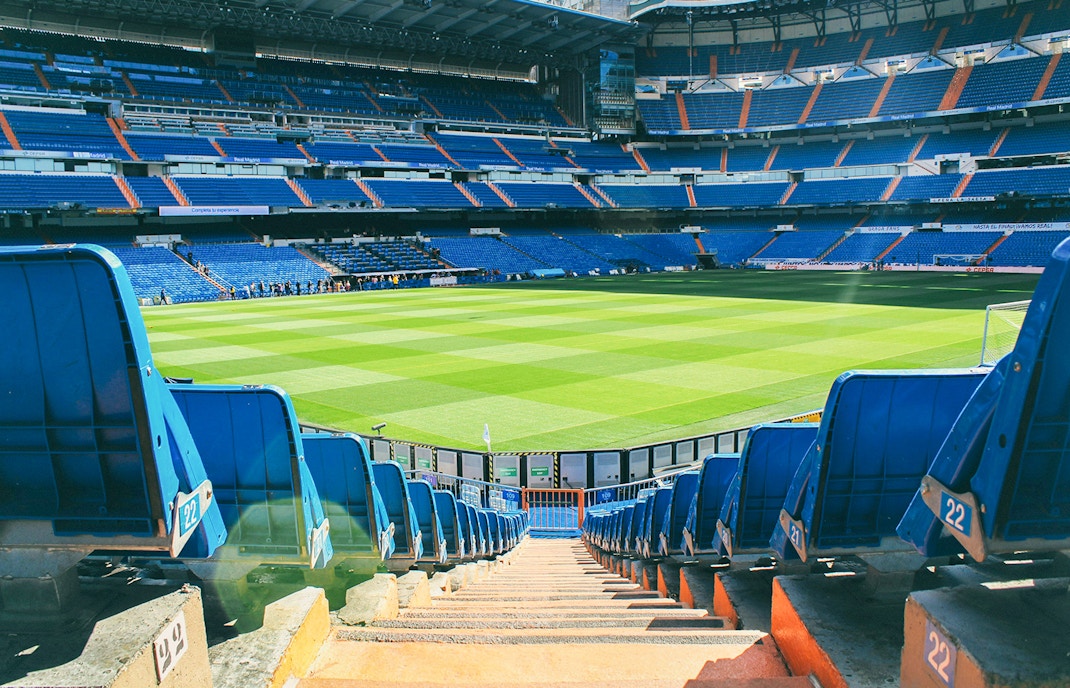
A name and a mission 1947–1955
Opened as Nuevo Estadio Chamartín, the ground quickly became central to Real Madrid’s identity. When it was renamed for Bernabéu in 1955, it also became a monument to his long-term vision.
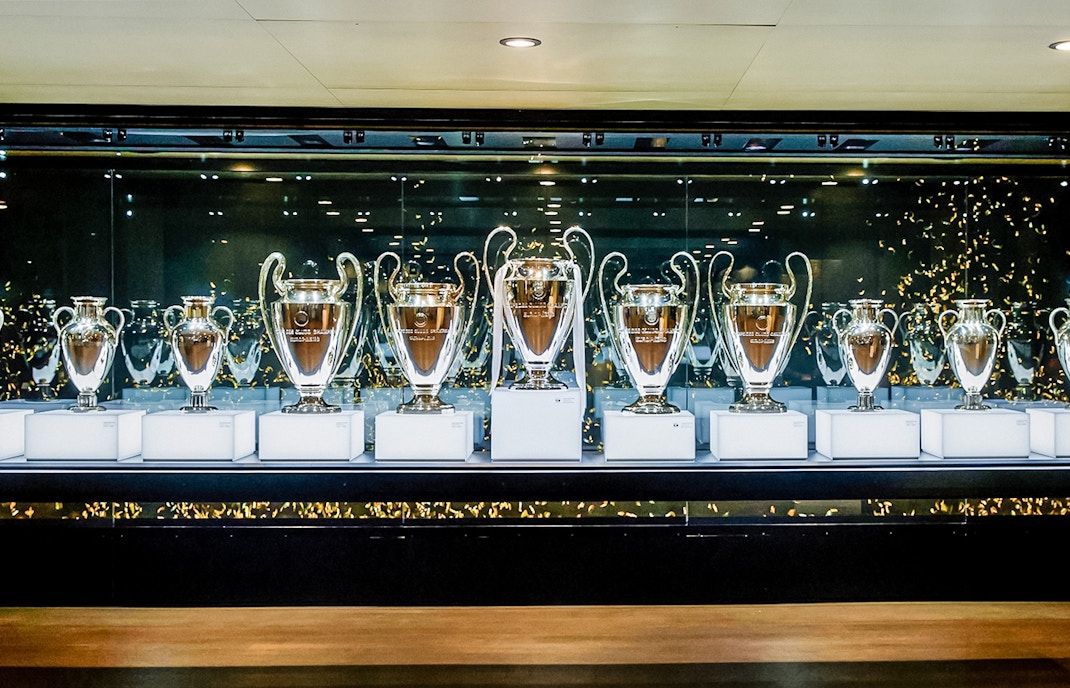
European dominance 1955–1978
As Real Madrid collected early European Cups, the stadium expanded with them. The Bernabéu became both fortress and symbol — a place where the club’s ambition felt physically visible from the towering stands.
From giant bowl to modern arena 1980s–2018
New safety standards, seating rules, and global events changed football architecture. The Bernabéu adapted with roofs, better circulation, and comfort upgrades, trading sheer capacity for a more modern experience.
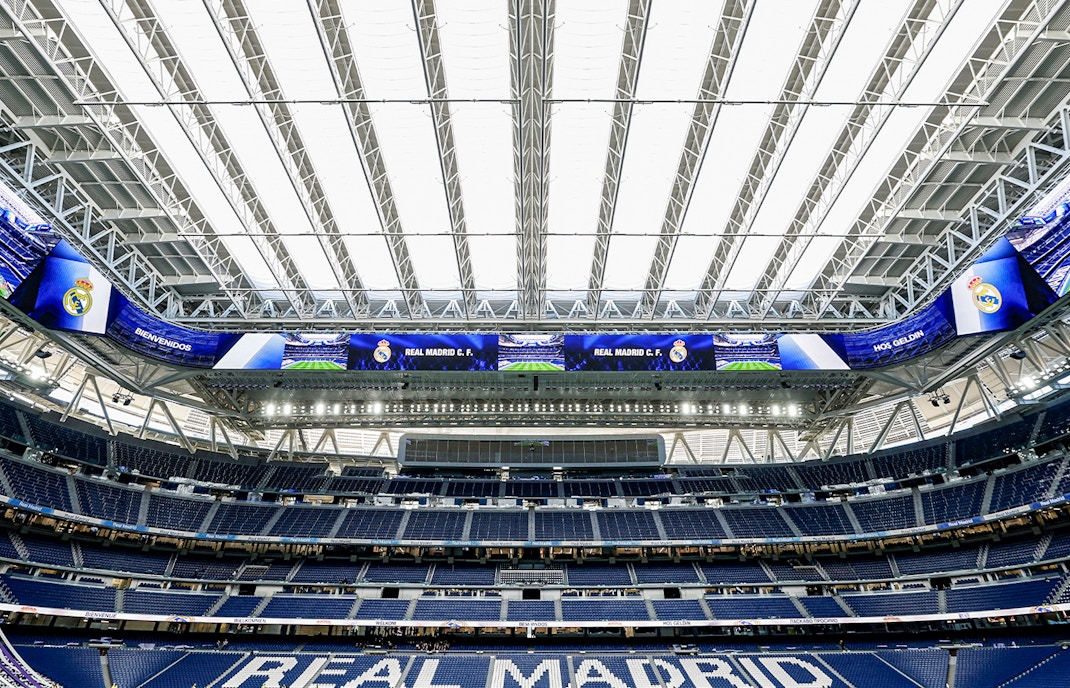
Reinventing the icon 2019–present
The latest redevelopment didn’t erase the past; it reframed it. A retractable pitch, new facade, and updated technology aim to keep the Bernabéu relevant far beyond football, while preserving its historic status.
Construction and architecture of Santiago Bernabéu Stadium
Construction began in 1944 under architects Luis Alemany Soler and Manuel Muñoz Monasterio, who designed a monumental reinforced-concrete stadium for a club with expanding crowds and ambitions. Later decades added towers, roofing, more seating, and hospitality areas. The latest redevelopment introduces a sleek metal exterior and retractable pitch system, so what you see today combines postwar engineering with a distinctly 21st-century redesign.
Additional information about Santiago Bernabéu Stadium’s history
Some of the stadium’s legacy comes from nights that still define European football. The 1957 European Cup Final, won 2–0 by Real Madrid against Fiorentina, helped establish the Bernabéu as a continental stage. In 1982, the FIFA World Cup Final brought global attention to the venue. More recently, dramatic Champions League comeback nights have refreshed its aura for a new generation.
| Renovation phase | Main changes | Impact on capacity or experience |
| --- | --- | --- |
| 1944–1947 | New postwar stadium built as Nuevo Estadio Chamartín | Gave Real Madrid a much larger, modern home |
| 1953–1954 | Major expansion and added tiers | Turned it into one of Europe’s biggest stadiums |
| 1980s–1990s | Roof, seating, safety, and comfort upgrades | Lowered capacity, but improved sightlines and standards |
| 2019–present | New roof, facade, retractable pitch, and event-ready systems | Created the 'new' Bernabéu visitors experience today |
A few smart ways to read that history on a visit:
- Spend 45–60 minutes in the Real Madrid Museum if you want more than a quick trophy-room stop.
- Start with the panoramic stands — they make the stadium’s changing scale easiest to grasp.
- On match days, access is usually limited to the museum and panoramic view up to 5.5 hours before kickoff.
- For a wider city day, pair your visit with the Combo (Save 9%): Santiago Bernabéu Stadium Tickets + Madrid Hop-on Hop-off Bus Tour or the Combo (Save 5%): Santiago Bernabéu Stadium Tour Tickets + 2-hour Welcome Tuk-Tuk City Tour.
- The stadium sits on Paseo de la Castellana (Google Maps: ‘Santiago Bernabéu Stadium’), so it’s easy to combine with a broader Madrid sightseeing plan.
Santiago Bernabéu Stadium today – Why it matters

Santiago Bernabéu Stadium today – Why it matters
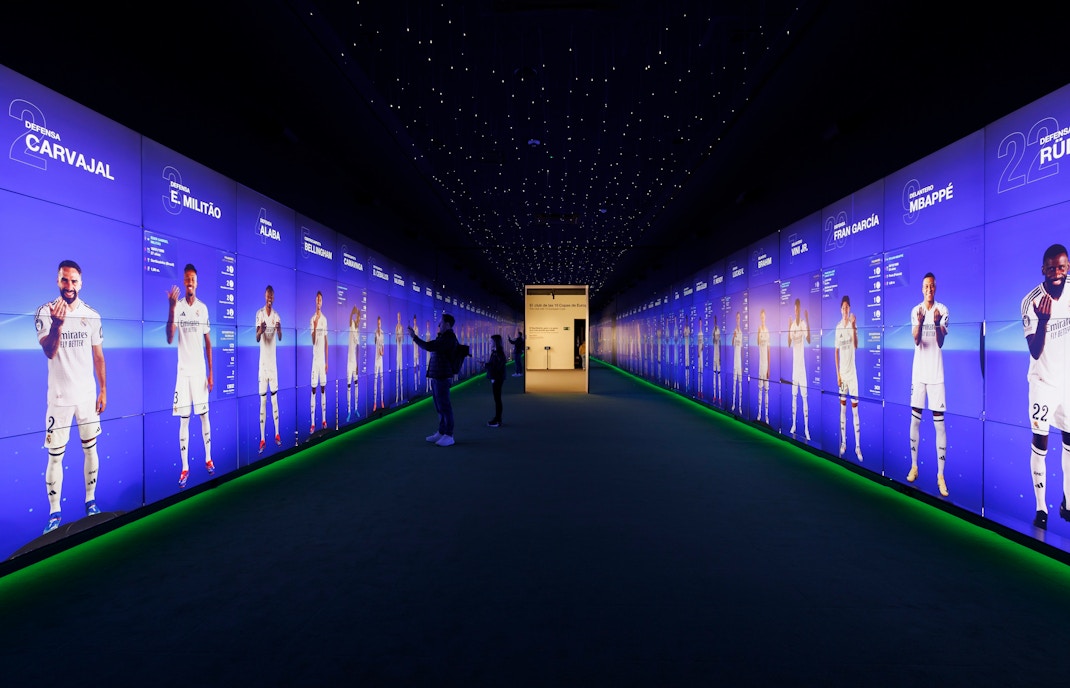
Today, Santiago Bernabéu is both Real Madrid’s home ground and a showcase of how historic stadiums adapt to new expectations. Managed by Real Madrid C.F., it welcomes visitors to the Real Madrid Museum, interactive exhibits, panoramic stands, and selected behind-the-scenes areas, though the route can change during ongoing works or event setup. Santiago Bernabéu Stadium Tour Tickets include timed entry to the stadium and museum, while the Santiago Bernabéu Stadium Guided Tour adds expert commentary in English or Spanish. For practical planning, continue to the main visitor guide or About page.
Frequently asked questions about Santiago Bernabéu Stadium's history
It opened on December 14, 1947, as Nuevo Estadio Chamartín.
It was renamed in 1955 to honor Santiago Bernabéu Yeste, the long-serving Real Madrid president who drove the project and shaped the club’s rise.
He was a former player, director, and president of Real Madrid, and one of the key figures in turning the club into a global power.
It grew past 100,000 in the mid-20th century, then fell as all-seater layouts, safety rules, and comfort upgrades transformed the venue.
It has hosted the 1957 European Cup Final, the 1964 European Nations’ Cup Final, the 1982 FIFA World Cup Final, and the 2010 UEFA Champions League Final.
The latest works added a new exterior, updated roof, and retractable pitch system, while reimagining the stadium as a multiuse venue.
Yes — the museum, trophy displays, panoramic views, and selected route areas connect directly to the club’s past, though access can vary by event day.
Yes. On match days, tours are limited, and access is typically available only up to 5.5 hours before kickoff.


