Plan your visit to Royal Collections Gallery
The Royal Collections Gallery is Madrid’s newest major museum and the best place to understand the Spanish Crown through paintings, armor, tapestries, carriages, and palace objects in one visit. It feels very different from the Prado: the route is linear, modern, and mostly downhill, with three main levels linked by long ramps. The biggest make-or-break detail is where you store your bag, because a wrong locker choice can force a full backtrack at the end. This guide covers timing, entrances, route planning, and ticket choices.
Quick overview: Royal Collections Gallery at a glance
If you want the short version before you book, start here.
- When to visit: Monday–Saturday 10am–8pm; Sunday and holidays 10am–7pm. Weekday mornings, especially 10am–11:30am, are noticeably calmer than 12 noon–3pm, because many Royal Palace visitors drift over after their palace slot.
- Getting in: From €14 for standard entry. Guided tours start from €39. You can sometimes walk up on quieter weekdays, but spring weekends and holiday periods are much easier with advance booking.
- How long to allow: 2–3 hours for most visitors. It stretches toward 3.5 hours if you stop for the Arab wall, temporary exhibits, and the terrace at Level -3.
- What most people miss: The 9th-century Arab wall and the Bosch tapestry usually get less attention than the headline paintings, even though both add real historical depth.
- Is a guide worth it? Yes, if you want the Habsburg-to-Bourbon story to make sense; if you mainly want to look at key works at your own pace, standard entry is enough.
🎟️ Tickets for Royal Collections Gallery sell out several days in advance during spring weekends and holiday periods. Lock in your visit before the time you want is gone.
Jump to what you need
🕒 Where and when to go
🗓️ How much time do you need?
🎟️ Which ticket is right for you?
🗺️ Getting around
🖼️ What to see
♿ Facilities and accessibility
🚫 Rules and restrictions
🗒️ Practical tips
🏛️ What else to visit?
🥗 Eat, shop and stay
Where and when to go
How do you get to Royal Collections Gallery?
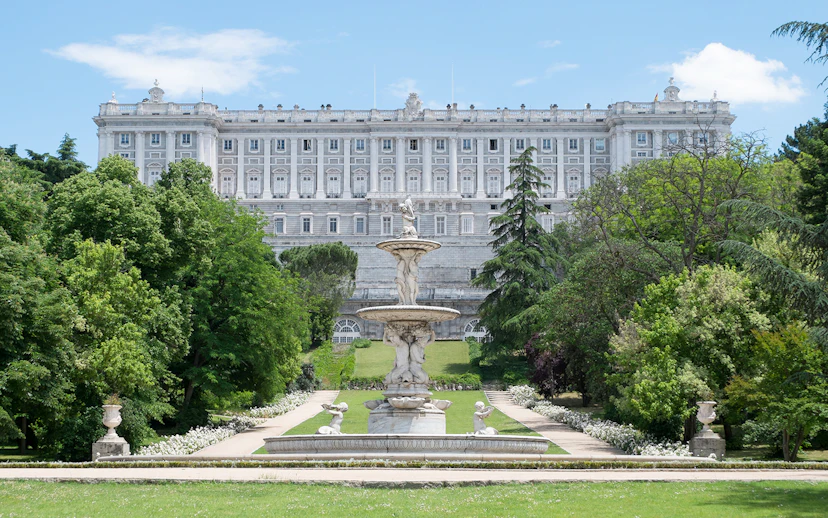
The Gallery sits on Madrid’s royal cornice between the Royal Palace and Almudena Cathedral, about 1.1km from Puerta del Sol and a short uphill walk from Ópera.
Calle de Bailén s/n, 28013 Madrid, Spain
- Metro: Ópera (Lines 2, 5, and R) → 5–7 min walk → easiest approach is via Plaza de Isabel II and Plaza de la Armería.
- Bus: Line 148 → stop near the Gallery door → useful if you’re coming from the Prado area without changing lines.
- Walk: Puerta del Sol → 12–15 min walk → Calle Mayor is the most direct and easiest route to follow.
- Taxi / rideshare: Drop-off at Plaza de la Armería → shortest walk to the main public entrance.
Which entrance should you use?
There are two entrances, and most visitors assume they’re interchangeable when they are not. The main mistake is entering at the top, using the Floor 0 lockers, and only realizing at the end that the natural exit is down by the gardens.
- Cornisa / Plaza de la Armería entrance: Located at the upper viewpoint beside the palace complex. Best for most self-guided visits and timed-entry tickets. Expect 10–20 min wait around 12 noon–3pm on busy weekends.
- Cuesta de la Vega entrance: Located on the lower side near the gardens. Best for groups, temporary exhibitions, and visitors already approaching from Campo del Moro. Expect shorter waits, but it’s less intuitive if you’re arriving from Ópera.
When is Royal Collections Gallery open?
- Monday–Saturday: 10am–8pm
- Sunday and holidays: 10am–7pm
- Free entry window: Monday–Thursday 6pm–8pm for eligible EU and Latin American visitors
- Last entry: 1 hour before closing
When is it busiest? Weekends, holiday periods, and roughly 12 noon–3pm are the heaviest times, when palace visitors spill over and security lines slow down.
When should you actually go? Aim for Tuesday–Thursday at 10am or later afternoon after 4pm, when the galleries feel easier to read and the main works are less crowded.
How much time do you need?
| Visit type | Route | Duration | Walking distance | What you get |
|---|---|---|---|---|
Highlights only | Entrance → Level -1 masterpieces and Arab wall → Level -2 Goya and decorative arts → Level -3 carriages → exit | 1.5–2 hr | ~0.8 km | You cover the best-known pieces and the building’s main idea, but you’ll move quickly through tapestries, smaller court objects, and most temporary material. |
Balanced visit | Entrance → Level -1 with Arab wall and armor → Level -2 Bourbon rooms → Level -3 Cube, carriages, and terrace → exit | 2.5–3 hr | ~1.2 km | This is the sweet spot for most visitors, adding the venue’s best surprises and enough time to understand the dynastic shift without lingering in every case or gallery. |
Full exploration | Entrance → all three levels in order → temporary exhibitions → Cube → terrace → internal lift back if needed for lockers | 3.5+ hr | ~1.6 km | You see the collection properly, including the objects that give the Crown story depth, but the long ramps, dense displays, and end-of-visit backtracking can feel heavy without a clear plan. |
Which Royal Collections Gallery ticket is best for you
| Ticket type | What's included | Best for | Price range |
|---|---|---|---|
General Admission | Entry to permanent collection + temporary exhibits + digital PDF guide | A self-paced visit where you want the freedom to stop at the Arab wall, the main paintings, and the carriages without following a group schedule | From €14 |
Combined Ticket: Royal Palace + Royal Collections Gallery | Entry to Royal Palace + entry to Royal Collections Gallery | Seeing both sites without paying twice and keeping the Gallery for a separate, lower-fatigue slot within the 7-day window | From €24 |
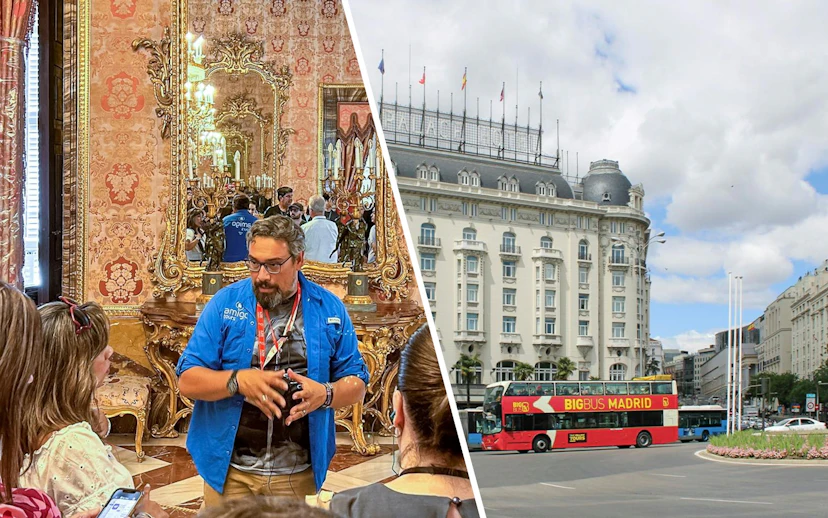
Standard Guided Tour | Priority access + entry ticket + expert guide + 1.5-hour tour | A visit where the dynastic story and court context matter more than lingering alone in front of every object | From €39 |
VIP Guided Combo | Skip the line access at both sites + Gallery entry + Palace entry + guided tour | Avoiding the friction of moving between two major royal sites on your own and wanting one structured route that ties them together | From €68 |
How do you get around Royal Collections Gallery?
How do you get around Royal Collections Gallery?
The layout is linear and descending rather than wing-based, which makes it easy to follow but slightly deceptive on time and energy. You won’t get lost often, but you can still make poor route decisions — especially with lockers and the final garden exit.
- Level -1: Habsburg galleries → armor, tapestries, Velázquez, Caravaggio, and the Arab wall → budget 45–60 min.
- Level -2: Bourbon galleries → Goya, porcelain, furniture, clocks, and decorative arts → budget 35–50 min.
- Level -3: Temporary exhibits, the Immersive Cube, royal vehicles, and terrace access → budget 30–45 min.
Suggested route: Start at the top, take the descent in order, and slow down earlier than you think on Level -1, because many visitors rush toward the carriages and then realize the Arab wall and best paintings were behind them.
Maps and navigation tools
- Map: A floor plan at reception and the digital guide help most with the one-way sequence and the location of elevators before the final exit.
- Signage: Wayfinding is generally good inside the galleries, but it is less intuitive around lockers, lifts, and the decision to exit toward the gardens.
- Audio guide / app: The paid audio guide adds object-level context, but a live guided tour does a better job of explaining the jump from Habsburg to Bourbon collections.
💡 Pro tip: Decide before you start whether you’re exiting through the gardens or returning to the top — the wrong locker choice is the one detail that can add an unnecessary uphill finish to an otherwise smooth visit.
Where are the masterpieces inside Royal Collections Gallery?

White Horse
Artist: Diego Velázquez
This unfinished royal equestrian portrait is one of the works that proves the Gallery is more than palace overflow. The horse has an almost ghostly presence, and the loose handling in the background is exactly what many visitors rush past when they see it from too close. Step back and let the unfinished surface read as atmosphere rather than absence.
Where to find it: Level -1, in the Habsburg section near the major court painting displays.
Mühlberg armor of Charles V
Era: 1544 ceremonial armor
This is one of the clearest objects for understanding royal image-making as power, not decoration. Most visitors notice the shine first and miss the etched imperial motifs and practical joint construction that made it wearable as well as symbolic. Walk around it slowly instead of treating it like a single front-facing piece.
Where to find it: Level -1, in the Royal Armory displays within the Habsburg galleries.
9th-century Arab wall
Era: Early medieval Madrid
These remains are among the oldest surviving structures in Madrid, and they give the museum a depth most visitors do not expect inside a royal collection. People often pass it too quickly because it sits within a larger museum flow rather than a separate archeology wing. Watch the audiovisual explanation first, or the wall will feel more fragmentary than meaningful.
Where to find it: Level -1, along the descent route in the Habsburg section.
Salome with the Head of John the Baptist
Artist: Caravaggio
This is one of the Gallery’s strongest paintings, and it rewards a slower look than the crowd usually gives it. The drama comes from the darkness as much as the figures, so the detail many people miss is how the black field intensifies the faces and hands rather than disappearing into the wall. Give it space and a few extra minutes.
Where to find it: Level -1, among the headline paintings in the Habsburg galleries.
Portrait of Charles IV in uniform
Artist: Francisco de Goya
This Bourbon-era portrait matters because it feels more psychologically honest than triumphal, which is not always what visitors expect in a royal museum. Many people glance at the uniform and move on, missing the tension in the face that makes the painting more than official propaganda. It’s one of the best bridges between politics and personality in the collection.
Where to find it: Level -2, in the Bourbon galleries among painting and decorative arts displays.
Royal Crown Coach
Era: 1829 royal carriage
This is the showpiece of the transport section and one of the most visually theatrical objects in the whole museum. Visitors often photograph it mentally and move on, but the details worth slowing down for are the royal crest, the velvet interior, and the gilded sculptural decoration all around the body of the coach.
Where to find it: Level -3, in the vehicles and carriage displays near the end of the route.
The Immersive Cube
Type: 360º projection space
This is the least traditional part of the visit, and it works best as a reset point rather than a box to tick. People often skip it because it looks contemporary in a historic museum, but it’s useful both for families and for anyone whose feet need a break after the ramps. Sit through a full loop instead of peeking in and leaving.
Where to find it: Level -3, beside the temporary exhibition and carriage areas.
Facilities and accessibility
- 🎒 Cloakroom / lockers: Free self-service lockers are on Floor 0, but they are inconvenient if you plan to take the natural exit at Level -3 toward the gardens.
- 🚻 Restrooms: Bathrooms are available on Levels -1, -2, and -3, so you do not need to climb back to the entrance during the visit.
- 🍽️ Café / restaurant: There is an on-site café and restaurant on Floor 0, which is most useful before you begin the full descent or after you return to the top.
- ♿ Wheelchair loan: Wheelchairs are available to borrow on-site, which makes this one of the easiest major museums in Madrid to navigate with mobility support.
- ♿ Mobility: The museum is fully accessible, with elevators to all floors and an award-winning design that works well for wheelchairs, strollers, and visitors who want to avoid stairs.
- 🧠 Cognitive and sensory needs: Weekday mornings are the calmest time to visit, while the Immersive Cube on Level -3 is usually the loudest and most visually intense space.
- 👨👩👧 Families and strollers: The long ramps make the route stroller-friendly from start to finish, though toddlers may tire near the final descent if you try to cover everything.
- 📍 Route planning: Accessibility inside the building is excellent, but the lower exit toward the gardens leaves you farther from Ópera and can feel awkward if you were expecting a flat return.
Royal Collections Gallery works best for school-age children who like armor, royal vehicles, and immersive spaces more than traditional wall-to-wall painting.
- 🕐 Time: 1.5–2 hours is realistic with younger children if you focus on the Arab wall, armor, the Cube, and the carriages.
- 🏠 Facilities: Elevators, accessible restrooms, and the linear route make it easier than many older museums to manage strollers and breaks.
- 💡 Engagement: Start with the armor or the Cube rather than the paintings, because once children are engaged by objects and movement, the art rooms land better.
- 🎒 Logistics: Bring only a small bag if possible, and avoid using the top lockers unless you already know you’re returning to Floor 0 before leaving.
- 📍 After your visit: Campo del Moro Gardens is the easiest nearby decompression stop if children need outdoor space straight after the museum.
Rules and restrictions
What you need to know before you go
- Entry is timed for standard admission, while reduced-rate and free-entry visitors should carry ID because eligibility is checked.
- Large bags are not practical inside and may need to go into the Floor 0 lockers before you start the route.
- Re-entry is not something to rely on here, so if you leave at Level -3 without your stored items, you may have to return internally before exiting or lose the easy garden finish.
- There is no dress code, but the long descending ramps make comfortable shoes more useful here than smart footwear.
Not allowed
- 🚫 Food and drink are not allowed in the galleries, so finish snacks before security or use the Floor 0 café.
- 🐾 Pets are not allowed, except for service dogs.
- 🖐️ Touching objects, barriers, or display structures is not allowed, which matters especially in the armor and carriage sections where people tend to lean in close.
Photography
Photography and videography are strictly not allowed inside Royal Collections Gallery, so do not plan on taking even non-flash snapshots of the artworks or interiors. Flash, tripods, and selfie sticks are also not permitted. If you want a photo stop, save it for the exterior viewpoints and the approach around Plaza de la Armería rather than the galleries themselves.
Good to know
- The combined Royal Palace + Royal Collections Gallery ticket is valid for 7 days from your palace visit, so you do not need to force both into the same tiring afternoon.
- If you want the Level -3 garden exit, take your bag strategy seriously at the start — it is the single most common friction point in an otherwise very smooth museum.
Practical tips
- Book at least 3–7 days ahead for spring weekends and holiday periods, because that is when the easiest late-morning slots disappear first; if you are late to a timed entry, security delays matter more here than the walk from the metro.
- Save your concentration for Level -1, not the final carriage floor, because the Arab wall, Velázquez, Caravaggio, and the best armor are where the museum earns its reputation.
- Tuesday to Thursday at 10am is the cleanest timing move, since you avoid both the palace spillover crowd and the compressed Monday–Thursday free-entry rush later in the day.
- Bring the smallest bag you can manage, because lockers on Floor 0 are free but inconvenient if you want the natural downhill finish toward Campo del Moro.
- If you are pairing the Gallery with the Royal Palace, do not do both back-to-back unless you genuinely enjoy long cultural days; the 7-day combined ticket is better used by splitting them.
- Eat either before you enter or after you return to Floor 0, because the on-site café is convenient but awkward to access once you are deep into the one-way descent.
- If architecture interests you, budget 10 extra minutes for the ramps, voids, and views, because the building itself is one of the strongest parts of the visit and many people rush through it like a corridor.
What else is worth visiting nearby?
Commonly paired: Royal Palace of Madrid
Royal Palace of Madrid
Distance: Adjacent — 2 min walk
Why people combine them: They tell the same royal story from two angles — the Palace gives you the ceremonial rooms, while the Gallery gives you the objects and context that make those rooms meaningful.
✨ Royal Collections Gallery and Royal Palace of Madrid are most commonly visited together — and simplest to do on a combo ticket. The combined pass saves money and gives you 7 days to split the visits instead of cramming both into one tiring block.
Commonly paired: Almudena Cathedral
Almudena Cathedral
Distance: 150m — 3 min walk
Why people combine them: It sits on the same ceremonial axis, so it is the easiest add-on if you want architecture, views, and a broader sense of Madrid’s royal center without extra transit.
Also nearby
Campo del Moro Gardens
Distance: Direct from the lower exit — 5 min walk
Worth knowing: This is the most natural cool-down after the museum, especially if you exit from Level -3 and want open space after the enclosed galleries.
Plaza de Oriente
Distance: 300m — 5 min walk
Worth knowing: It is the best nearby pause point for a coffee or a palace-facing break, and it works well if you want to regroup before heading to Ópera.
Eat, shop and stay near Royal Collections Gallery
- On-site: Floor 0 café and restaurant, convenient for a pre-visit coffee or quick fallback meal, but you are mostly paying for ease rather than destination dining.
- Café de Oriente (3-min walk, Plaza de Oriente 2): Classic Spanish and international dishes in a polished setting with palace views, best if you want a proper sit-down meal after the visit.
- Mercado de San Miguel (8-min walk, Plaza de San Miguel s/n): Tapas, snacks, and drinks under one roof, which works well if your group wants different things without committing to a long lunch.
- Chocolatería San Ginés (10-min walk, Pasadizo de San Ginés 5): Churros and chocolate in a Madrid institution, ideal for a late-morning break or an easy post-museum sugar reset.
- 💡 Pro tip: If you want the smoothest day, eat before entering or after finishing the full route — stopping too early at Floor 0 makes the one-way descent feel more stop-start than it needs to.
- Plaza Mayor arcades: Fans, ceramics, postcards, and standard Madrid souvenirs, useful if you want an easy browse within 8–10 minutes of the museum.
- Casa de Diego: Umbrellas, hand fans, canes, and traditional accessories near Puerta del Sol, worth the 15-minute walk if you want something more specific than generic gift-shop souvenirs.
Yes — if your trip is short and you want to walk to Madrid’s royal core, this area is a very practical base. It is handsome, central, and easy for the Palace, the Gallery, Ópera, and Sol, though hotel prices are rarely the cheapest in the city. If you want more nightlife or a more local evening rhythm, you may prefer to stay elsewhere and just day-trip into this district.
- Price point: Mid-range to upscale, with palace-adjacent hotels usually costing more than comparable stays farther east or south.
- Best for: Visitors on a short trip who want to reach the main royal and historic sights on foot with minimal planning.
- Consider instead: Sol or the Literary Quarter if you want more restaurants and late-night energy, or La Latina if your priority is food and neighborhood atmosphere over palace-front convenience.
Frequently asked questions about visiting Royal Collections Gallery
Most visits take 2–3 hours. You can do the highlights in about 90 minutes if you move briskly, but a fuller visit with the Arab wall, the major paintings, the Cube, and the terrace usually lands closer to 3 hours.
Yes, if you want a specific time on weekends, holidays, or spring travel dates. Quieter weekday visits can still be booked last-minute, but the most convenient late-morning slots are the first to go when demand rises.
It is worth it mainly for busy weekends and combined Palace-plus-Gallery days. You still need to clear security, but you avoid the ticket-office friction that builds around 12 noon–3pm and makes a short museum visit feel slower than it should.
Arrive about 15 minutes early. That gives you enough buffer for security and locker decisions without standing around too long, which matters more here because a slow start compresses the rest of your timed visit.
Yes, but large bags are inconvenient and may need to go into the Floor 0 lockers. A small bag makes the visit easier, especially if you want to exit naturally at Level -3 without backtracking to the entrance.
No, photography and videography are not allowed inside the museum. That includes casual phone photos as well as flash, tripods, and selfie sticks, so plan to enjoy the collection without relying on camera stops.
Yes, and it works well for groups because the route is linear and easy to follow. Guided group visits are especially useful here, since the dynastic shifts between floors make more sense when someone connects the objects into one story.
Yes, especially for children who respond to armor, carriages, and immersive spaces. The long ramps, elevators, and clear route make logistics easier than in many older museums, though very young children may lose interest if you try to cover every room.
Yes, it is one of the most accessible major museums in Madrid. Elevators reach all floors, wheelchairs are available to borrow, and the building’s recent design works well for both wheelchair users and visitors with strollers.
Yes, there is a café and restaurant on Floor 0, and you have better nearby choices within 5–10 minutes. Café de Oriente is the easiest sit-down option, while Mercado de San Miguel works well if you want something faster and more flexible.
Yes, unless you bought the combined Palace + Gallery ticket. A standard Royal Palace ticket does not automatically include the Gallery, but the combo pass is valid for 7 days, which makes it much easier to split the two visits.
Buy from the official site or a verified partner only. Unofficial resellers around the royal complex can charge far above the standard €14 entry price, and a bad ticket can still leave you in the slowest line with no practical recourse.