Quick Information

RECOMMENDED DURATION

2 hours

NUMBER OF ENTRANCES

5

Plan your visit

Did you know?

Commissioned by Charles III in 1785, Prado Museum was originally designed by Juan de Villanueva as a natural science museum. King Ferdinand VII and Queen Maria Isabel of Braganza later opted to use it to house the royal paintings, and the Museo Nacional Del Prado opened its doors in 1819.

Prado Museum boasts one of the most extensive collections of Francisco de Goya’s works, including over 150 paintings, over 600 drawings, over a 100 handwritten documents, and a selection of prints.

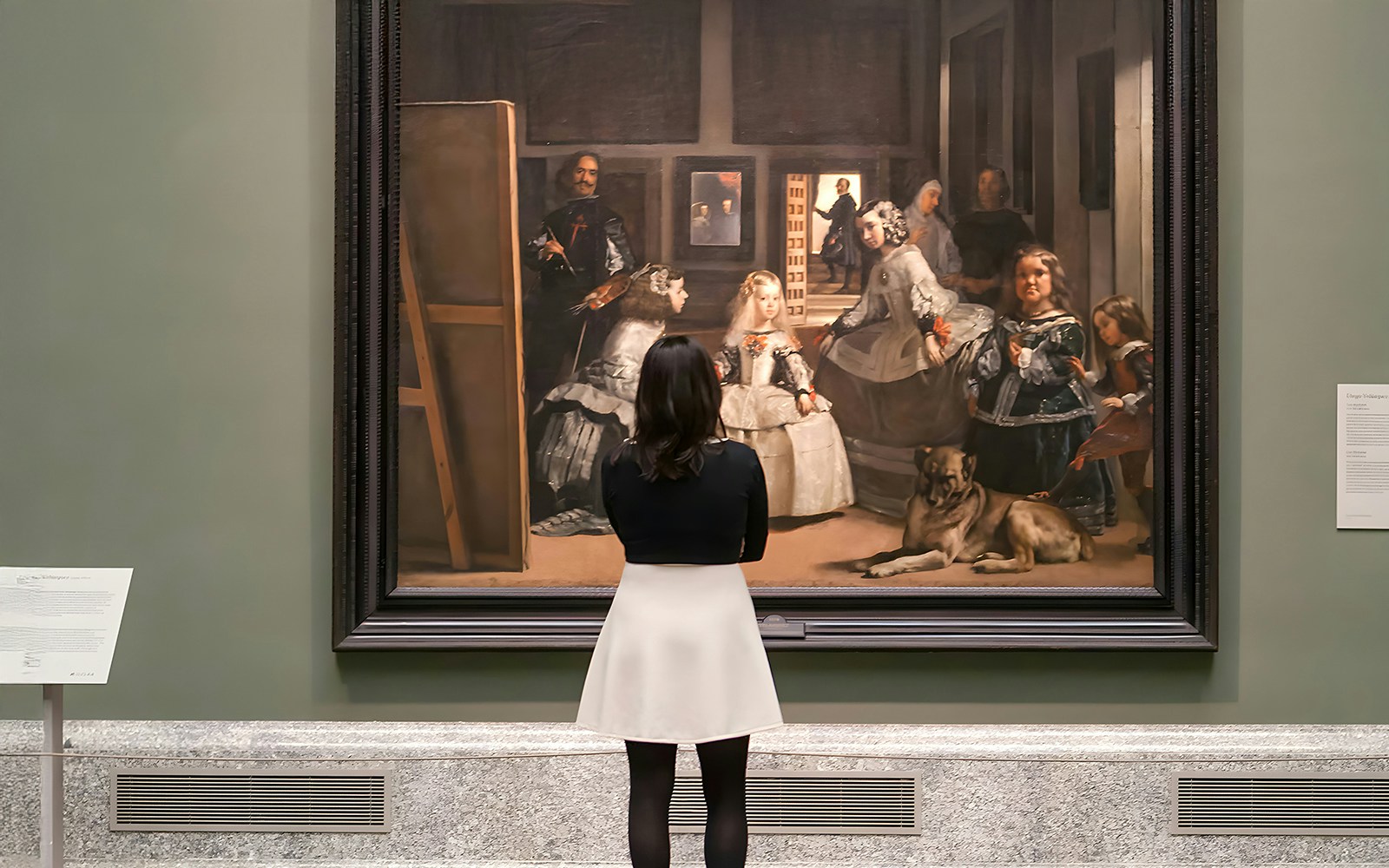
The most famous painting in the museum is Velázquez’s Las Meninas, one of the largest canvases from the Sevillian painter. Considered controversial for its defiance of genre, this snapshot of life at the Spanish court is as unsettling as it is captivating.

Why is the Prado Museum in Madrid a must-visit attraction?

The Prado isn’t the kind of museum you visit just to tick a box; it’s the one that stays with you. From royal portraits that stare back at you to Goya’s dark masterpieces that feel almost too real, every gallery pulls you deeper into Spain’s history and imagination. Even if you’re not an art person, the Museo Nacional del Prado has a way of turning curiosity into fascination. It’s iconic, emotional, and absolutely unmissable.

What to expect at the Prado Museum

Visitors admiring classical art in Prado Museum, Madrid, Spain.
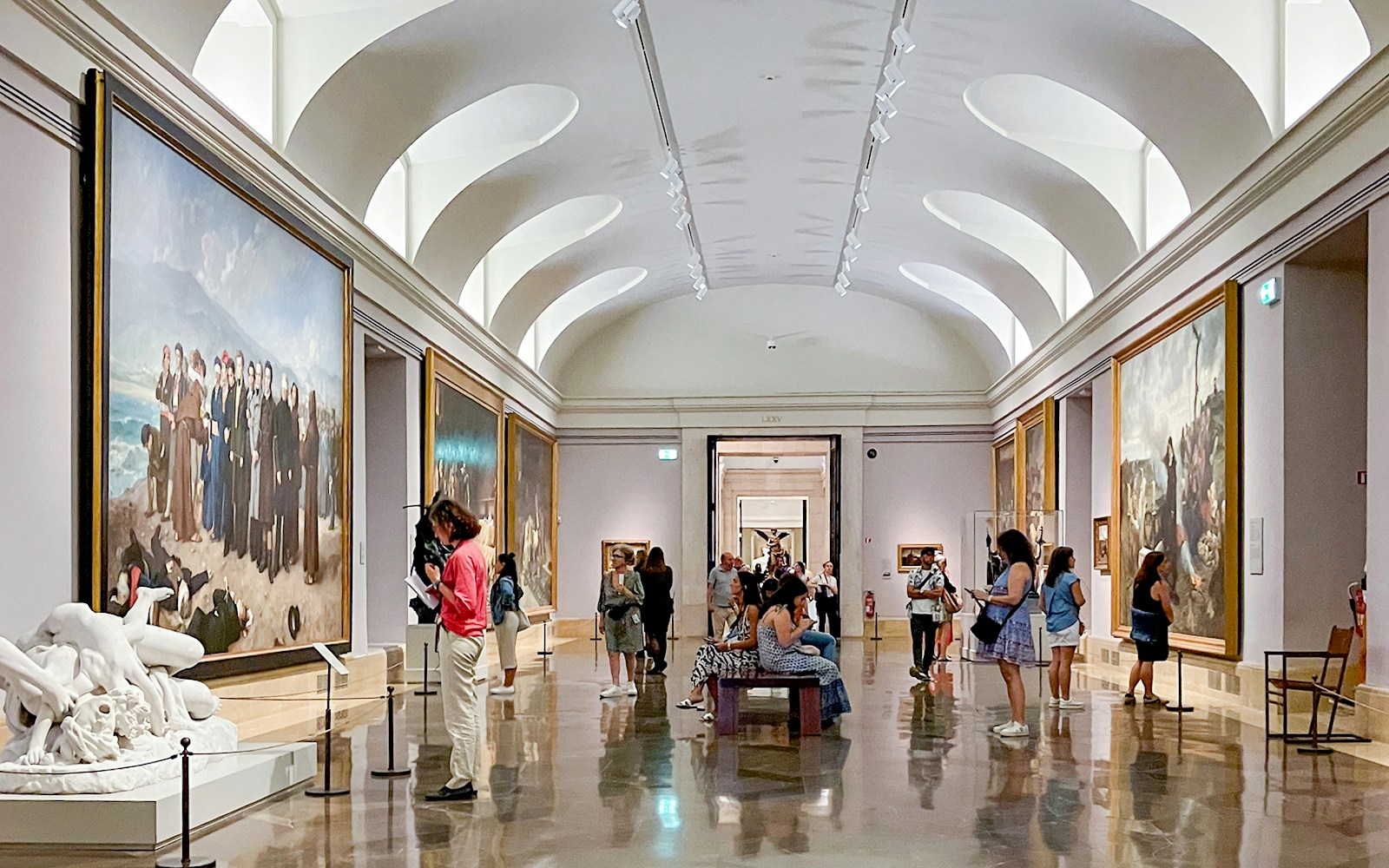
Visitors viewing artworks inside the Prado Museum, Madrid.
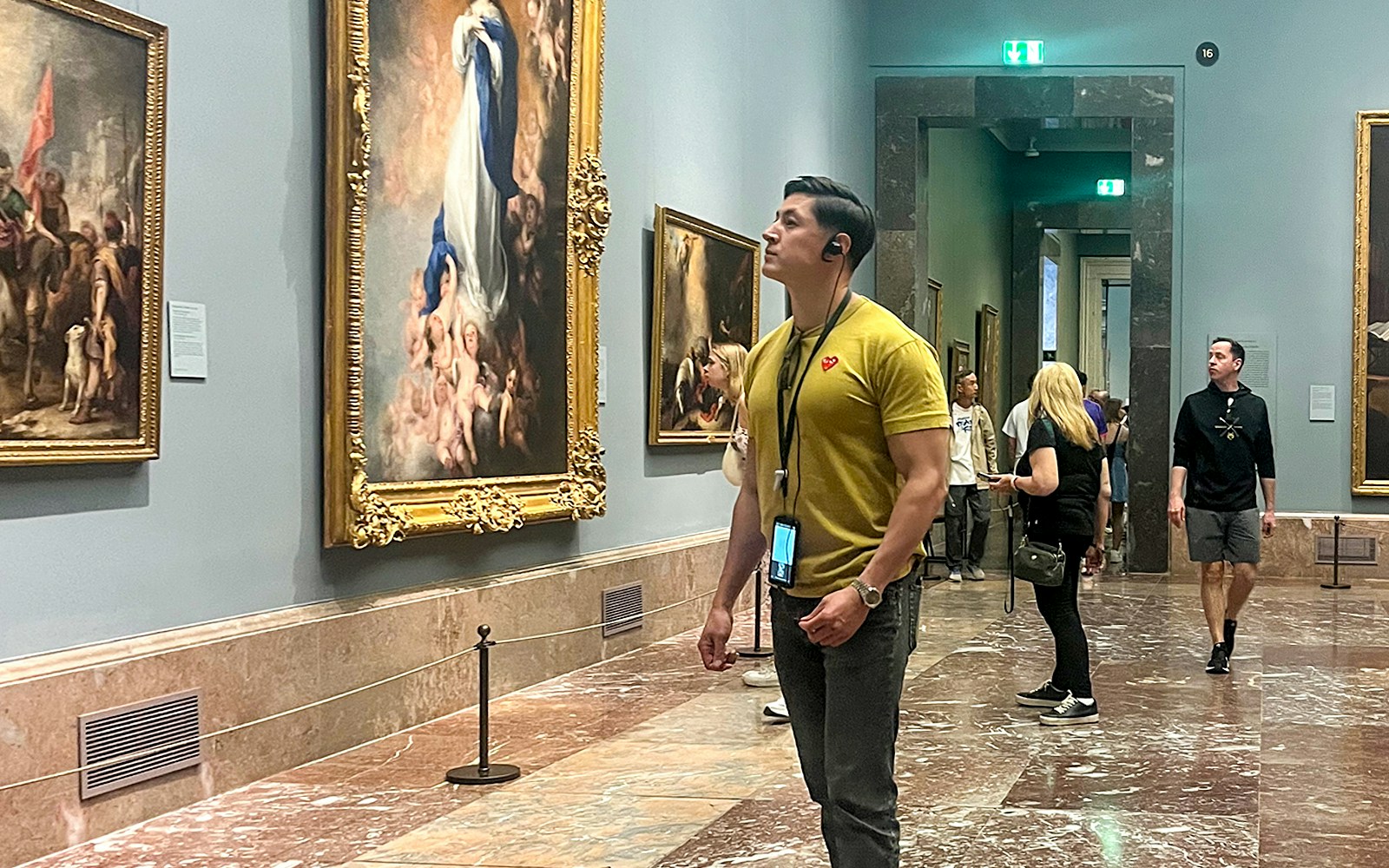
Visitors viewing artwork inside Prado Museum, Madrid.
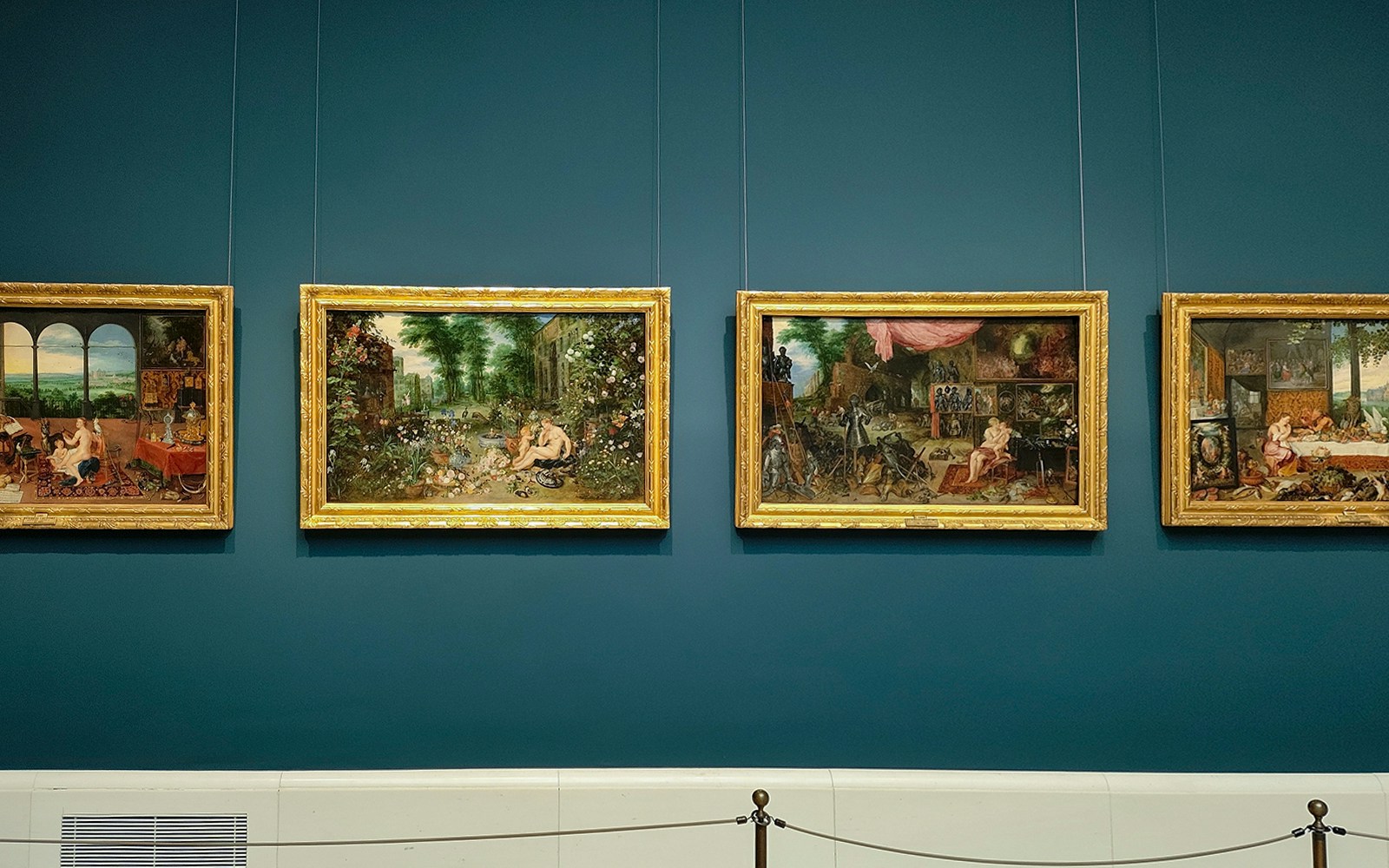
Visitors viewing art at Prado Museum, Madrid, with entry tickets.
Visitors viewing art pieces inside Prado Museum, Madrid.
1/5

Unmatched European art collection

With a vast collection of Spanish art from the 12th to the 20th centuries, it features eight centuries of work by artistic legends like El Greco, Velázquez, and Goya, among several others.

Stunning architecture

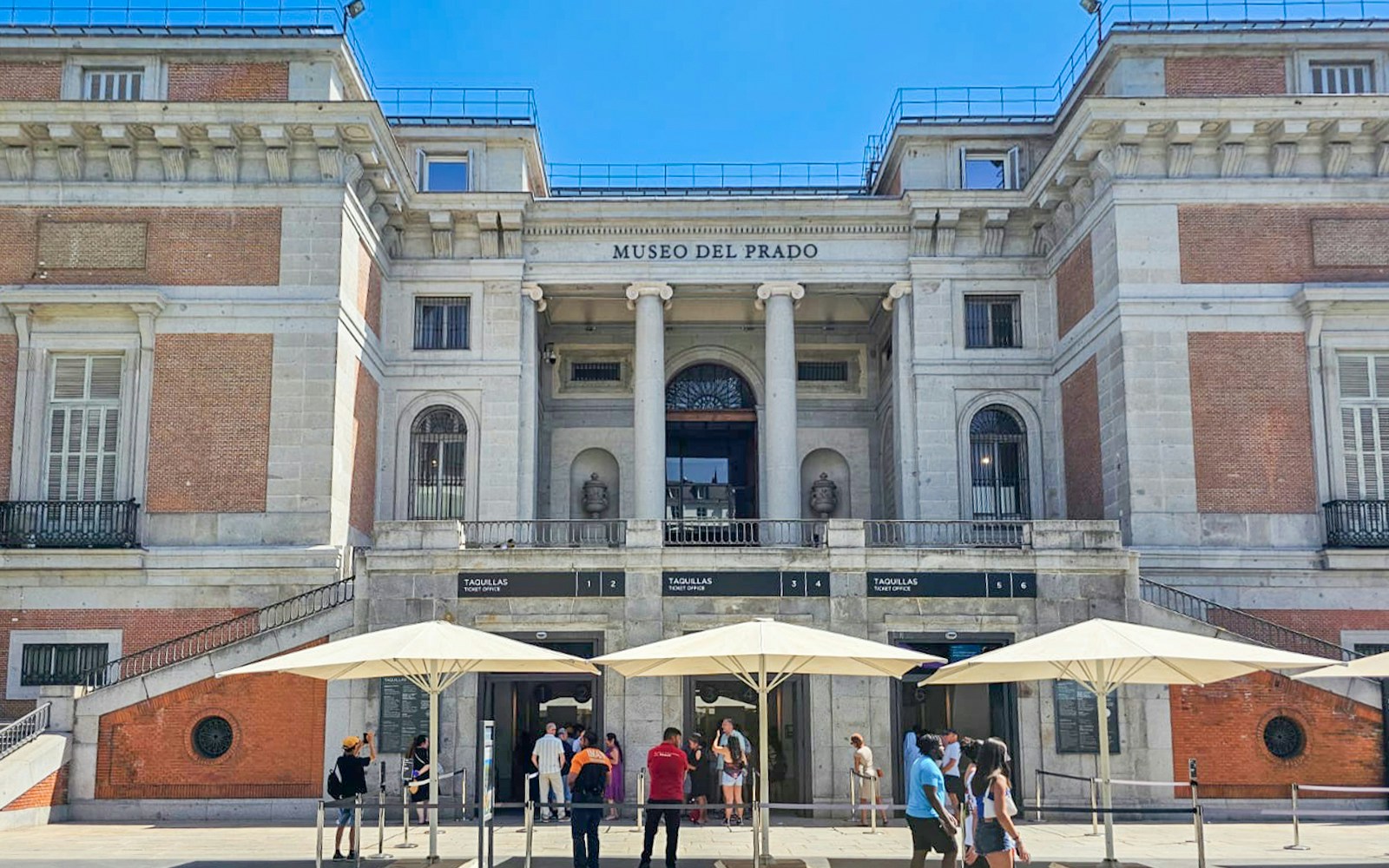
Built in a neoclassical style, the Museo Nacional del Prado is just as much about its architecture as it is about the art it houses. Juan de Villanueva drew inspiration from Greek and Roman temples, making every element worthy of a second glance.

A stellar historical legacy

Founded over 200 years ago, the museum originally housed the Spanish royal collection, including treasures brought by monarchs like Philip V. This historic context enriches the visit, connecting art to Spain’s royal and cultural history.

Diverse artistic styles

The Prado Museum Madrid spans medieval to early modern European art, allowing visitors to explore a broad spectrum of styles and periods in one place. From Renaissance masterpieces by Titian and Rubens to 18th-century works by Giambattista Tiepolo, the museum takes you on a journey through time.

Located in the Art Triangle

The museum’s location in central Madrid, and more specifically in the Art Triangle, puts it within walking distance of the Reina Sofia and Thyssen-Bornemisza Museums. Pro tip: If you want to visit all three, you must purchase the Paseo del Arte 3 Museum Pass, which gets you access to all three museums.

Prado Museum layout

The Prado can feel overwhelming if you wander aimlessly. Endless galleries, adjoining rooms, and art that spans centuries. But when you follow the layout with purpose, the museum becomes a story, not a maze. Here’s how to move through it in a way that feels intuitive, efficient, and rewarding.

Floor 1: the masterpieces floor (start here)

Why it matters:

This floor holds the Museo del Prado’s most famous works and the paintings that define Spanish and European art. Starting here means you see the icons before attention fatigue sets in.

What to see:

  • Las Meninas – Velázquez (Room 12)
  • The Garden of Earthly Delights – Bosch (Room 56)
  • The Third of May 1808 – Goya (Room 32)
  • El Greco’s elongated, surreal religious figures (Rooms 8–11)
  • Rubens’ mythological masterpieces (Rooms 62-65)

How to navigate:

Start with Velázquez, then loop clockwise: Rubens → Bosch → Titian → Goya. This path builds context and prevents backtracking.

Floor 0: the foundations and early Europe

Why it matters:

This floor explains the artistic roots that influenced everything upstairs. Religion, Flemish realism, symbolism, and Spain’s early identity.

What to see:

  • Van der Weyden’s Descent from the Cross (Room 58)
  • Flemish Gothic panels and early Spanish devotional works (Rooms 51–55)
  • Pedro de Mena sculptures like life-like faces, glass tears, real hair (Room 19)
  • Decorative rooms with tapestries and devotional art (Rooms 60–64)

How to navigate:

Move room-to-room in chronological order, it’s laid out like chapters. If a room feels similar to the previous one, that’s intentional as this period was about repetition and devotion, not experimentation.

Floor 2: the quiet collections and finishing notes

Why it matters:

This floor reveals the transition from dramatic history painting to intimate portraiture, sketches, and the beginnings of modernity. It's also where the Prado breathes with fewer crowds and slower pacing.

What to see:

  • Goya’s sketches and early works (Room 67a)
  • 19th-century portrait galleries (Rooms 67–69)
  • Landscapes and still lives are overlooked by most visitors (Room 67b)

How to navigate:

Stroll, don’t hunt. This floor is about discovery, not “checking off.” It’s the perfect end to the narrative arc: from grand storytelling to personal expression.

Highlights of the Prado Museum in Madrid

Placeholder Image Headout Blimp

Las Meninas by Velázquez

A royal portrait that pulls you into the scene, blurring the line between viewer, painter, and subject in a genius visual twist.

Placeholder Image Headout Blimp

Brief history of the Prado Museum 

The Prado didn’t start as a grand art museum; it actually began as a science building planned in the late 1700s. But everything changed thanks to Queen María Isabel de Braganza, who loved art enough to convince the king that Spain deserved a place to showcase its masterpieces.

So in 1819, the doors opened with just a few hundred paintings from the royal collections—mostly Velázquez, Goya, and El Greco. Word spread quickly, and the Prado grew, expanded, and evolved as Spain did.

Today, it holds thousands of works spanning centuries, revolutions, and artistic eras. It’s no longer just a royal gallery, but it’s a cultural time capsule and one of the world’s most influential art museums.

Book Prado Museum tickets and tours

Museo del Prado Tickets

Book now, pay later
Flexible duration
Audio guide

Museo del Prado Skip-the-Line Guided Tour

Free cancellation
Book now, pay later
1 hr. 30 min. - 2 hr.

Art Walk Pass: Museo del Prado + Thyssen Bornemisza + Reina Sofia Entry Tickets

Extended validity
Flexible duration

Combo (Save 8%): Royal Palace of Madrid Skip-the-Line Tickets + Museo del Prado Entry

Architecture of the Prado Museum 

The Museo del Prado was designed by Juan de Villanueva, one of Spain’s most important neoclassical architects. His vision was elegant, symmetrical, and rooted in Enlightenment ideals, a building meant for learning and culture. Villanueva also designed landmarks like the Royal Observatory and the Botanical Garden, helping shape Madrid’s academic and artistic identity.

Frequently asked questions about Prado Museum

The Prado Museum was officially opened to the public on November 19, 1819, initially named the Royal Museum of Paintings and Sculptures.