
Madrid Ticket

Quick Information

ADDRESS

Pl. de Colón, 1, 28004 Madrid, Spain

Plan your visit

Did you know?

The museum houses over 450 figures and continues to update its collection with contemporary icons.

Some figures are made using real hair and glass eyes for extra realism.

It features Spain’s only wax figure of King Felipe VI alongside other Spanish royalty.

Madrid Wax Museum tickets

Skip-the-Line Tickets to Wax Museum Madrid

Explore at your pace

Combo (Save 4%): Madrid Wax Museum + Parque de Atracciones Tickets

Explore at your pace

Combo (Save 5%): Wax Museum Madrid + Santiago Bernabeu Stadium Tickets

Explore at your pace

Is the Madrid Wax Museum worth visiting?

Step inside and the mood changes fast: one room feels like a royal court, the next like a film set, and then suddenly you are face-to-face with athletes, monarchs, and movie stars at arm’s length. It is less a hushed museum and more a theatrical walk-through, which is exactly why first-timers remember it. The Madrid Wax Museum opened to turn Spanish history and global celebrity culture into something visual, immediate, and easy to move through. Instead of reading labels across long galleries, you get staged scenes, costumes, lighting, and familiar faces that make the timeline feel accessible.

The payoff is not reverence but recognition. You leave with the odd, entertaining feeling that you have crossed decades of pop culture in under 2 hours, with photo moments that still feel tied to a story.

Skip it if: you only enjoy traditional museums built around original artifacts and quiet contemplation.

What to see inside Madrid Wax Museum?

Wax figure of Clint Eastwood in cowboy attire at Wax Museum Madrid.
1/7

Spanish history hall

This is the museum’s backbone: monarchs, explorers, and defining moments from Spain’s past staged as full scenes rather than isolated figures. Start here to understand the museum’s tone before moving into celebrity-heavy rooms.

The royal family and court scenes

The contemporary Spanish royals sit alongside earlier rulers in carefully costumed displays. These rooms are some of the most photographed because the staging feels formal, ceremonial, and distinctly tied to Spanish identity.

World leaders, thinkers, and cultural icons

Expect a mix of political figures, artists, scientists, and famous personalities from outside Spain. The fun here is the contrast: serious historical names appear just a few steps from instantly recognizable modern faces.

Film and music celebrities

This is the lighter stretch of the museum, packed with actors, singers, and pop-culture staples. Even when the likenesses vary, the room works well because visitors move quickly, spot familiar names, and stop often for photos.

Sports legends gallery

A strong section for football and tennis fans, with figures linked to Spanish and international sport. Most visitors spend longer here than expected because the sets are built for easy posing and group photos.

The horror experience

The tone shifts sharply here. Horror characters, darker lighting, and theatrical effects make this the museum’s most talked-about zone, especially for teens and adults who want something stranger than a standard museum circuit.

Temporary themed exhibits

Rotating installations keep the visit from feeling static for repeat visitors. If a special exhibit is running during your visit, see it last; it usually works better as a change of pace than as your introduction.

Weekends bunch up fast

The museum visit works best when you move from room to room without stopping at the entrance. Skip-the-Line Tickets to the Wax Museum Madrid keep the visit brisk, so you reach the horror, sports, and royal galleries first and quickly.

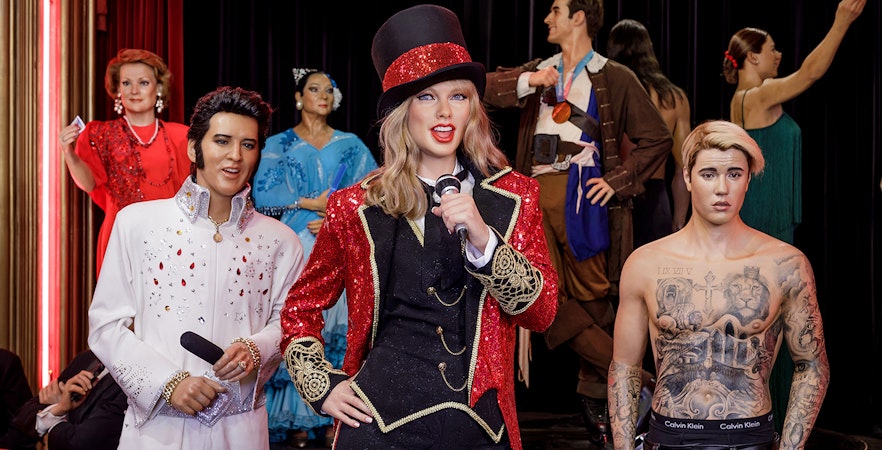
Wax figures of celebrities at Wax Museum Madrid exhibit.

How to explore the Madrid Wax Museum

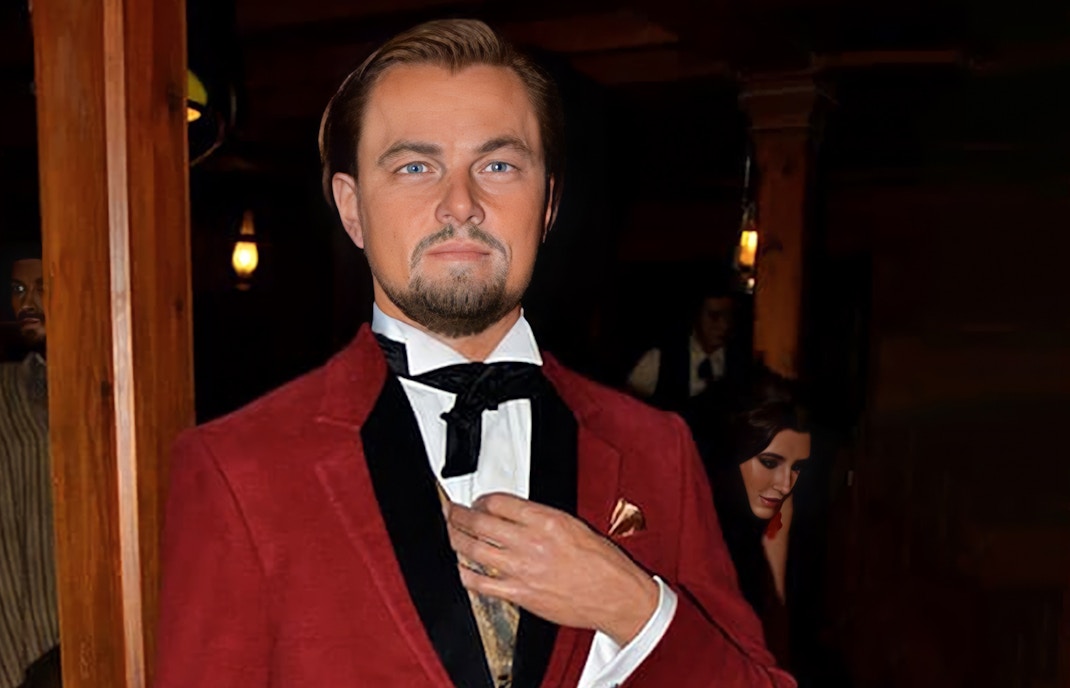
Wax figure of Leonardo DiCaprio in a red suit at the wax museum in Madrid.

Plan on 1.5–2 hours for a full visit, or about 75–90 minutes if you want the core rooms and quick photo stops only. The difference comes down to how long you linger in the Spanish history tableaux, whether a temporary exhibit is on, and how busy the horror section is when you reach it.

Start with the historical galleries so the museum’s logic makes sense before the celebrity rooms take over. Moving from Columbus and the Catholic Monarchs into modern royalty, then into film, music, sports, and the horror zone gives the visit a clear progression from national story to global fame.

  • Must-see: The Spanish history hall, the royal family scenes, the sports gallery, and the horror walk-through.
  • Optional: Temporary themed exhibits and slower photo sessions with celebrity figures; they add 20–30 minutes.
  • Guided vs. self-paced: Self-paced works well here because the attraction is visual and easy to navigate. A guide or audio support becomes useful if you want more context on the Spanish historical scenes, which can otherwise feel like a fast-moving sequence of faces.

Wax figure of a man in a black shirt at Wax Museum Madrid.

Budget 90 minutes to 2 hours for the museum itself; closer to 2 hours if you stop for photos in every room, use the augmented-reality features, or linger in the sports and horror sections. The visit is easiest when treated as a continuous walk rather than a room-by-room deep study.

Suggested route: Begin with the Spanish history galleries while your attention is freshest, because the royal scenes and historical tableaux give the rest of the museum context. Move next into the international celebrity rooms, then the sports area, where most visitors slow down for photos. Save the horror section or any temporary exhibit for the end, since it changes the mood sharply and can be skipped without breaking the flow.

  • Must-see: Christopher Columbus and the Catholic Monarchs tableau, the contemporary Spanish royals, and the sports legends gallery.
  • Optional: Temporary exhibits and the horror experience, which add atmosphere but can take 20–30 extra minutes.
  • Guided vs. self-paced: Self-paced works well here, but an audio guide helps connect the Spanish history rooms, which are more visual than explanatory.

Brief history of the Madrid Wax Museum

  • 1972: The Madrid Wax Museum opens near Plaza de Colón as a walk-through attraction combining history, celebrity culture, and staged set design.
  • 1970s–1980s: Early galleries establish the museum’s identity by pairing Spanish monarchs, explorers, and public figures with internationally known personalities.
  • 1990s: Sports, film, and television figures take on a larger role, reflecting the museum’s shift toward broader family appeal.
  • 2000s: The museum expands its themed environments, making rooms feel more like scenes and less like traditional display cases.
  • 2020s: Digital features and rotating themed exhibits, including sci-fi and horror elements, refresh the experience for returning visitors.
  • Today: The collection includes more than 450 figures and remains one of Madrid’s most unusual alternatives to the city’s art-heavy museum circuit.

Who built it?

The Madrid Wax Museum is not the work of one star architect or sculptor. Its identity comes from a collaborative studio model: Wax artists, costume makers, historians, and set designers build each scene so the museum feels closer to a theatrical production than a neutral gallery.

Architecture of the Madrid Wax Museum

Style

The building itself is secondary; what you notice is theatrical exhibition design, with dark transitions, spotlighting, and staged rooms that make each section feel like a different world.

Materials

Wax, fabric costumes, painted backdrops, props, and controlled lighting do most of the work, so texture matters more here than monumental construction.

Layout

The clever feat is spatial sequencing. Royal courts open into celebrity scenes and sports sets, using partitions, sound, and lighting to shift mood quickly.

On the ground

You rarely face a single statue in isolation. Most figures are grouped into scenes, which makes photo-taking easier and helps each room feel active rather than static.

Design team

No single architect defines the attraction; its character comes from sculptors, set builders, and curators who treat each gallery like a miniature film set.

How the wax figures are made

Each figure here starts with more craft than most visitors expect. Sculptors work from photographs, measurements, costume references, and facial studies, then build skin tone, hair, eyes, and clothing layer by layer. That process is why some rooms feel convincing at first glance and slightly uncanny up close. The tension is part of the appeal. You are not just seeing famous faces; you are seeing how carefully staged lighting, posture, and wardrobe can trick your eye for a few seconds.

Frequently asked questions about the Madrid Wax Museum

Yes, especially if you want a lighter, more interactive break from Madrid’s art museums. The mix of Spanish history, celebrity figures, and themed rooms gives you more variety than a standard gallery visit.