Rounded arches, squat pillars, and fortress-like exteriors define the Old Cathedral.
Salamanca Cathedral: Peek inside Salamanca’s UNESCO masterpiece
Rising with grace above the old town, Salamanca Cathedral is basically two churches in one. The Old Cathedral whispers medieval secrets in Romanesque stone, while the New Cathedral bursts with Gothic and Baroque drama. Together, they form one of Spain’s most extraordinary religious sites, a true time capsule of faith, art, and history.
What’s to see inside Salamanca Cathedral?
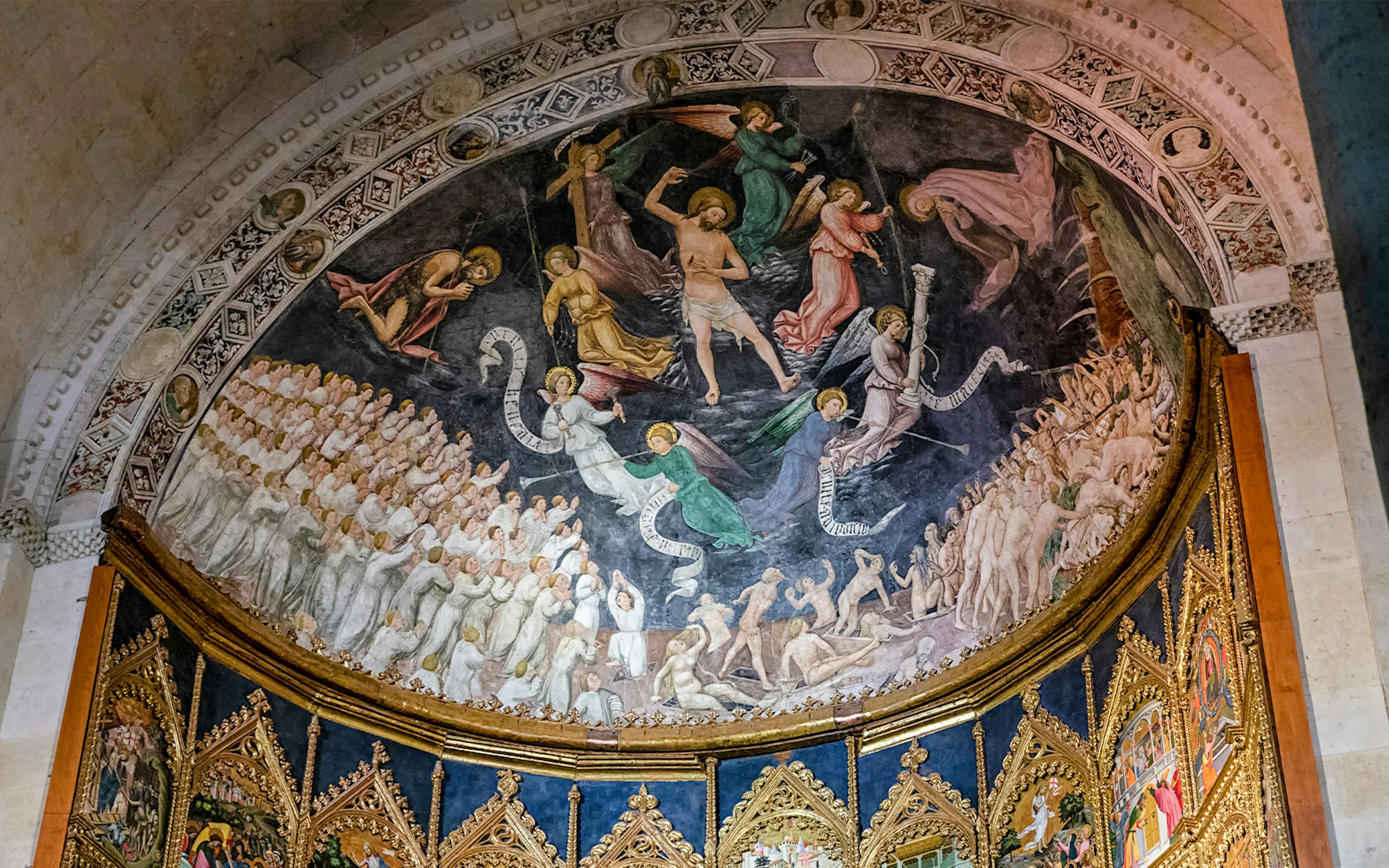
1/5
Old Cathedral (Catedral Vieja)
Step into an intimate Romanesque world where thick stone walls echo with silence. The star of all chapels is the one dedicated to San Martín. It is decorated with vivid frescoes that tell Biblical stories in jewel tones. Don’t miss the Torre del Gallo, its distinctive dome shimmers under the Salamanca sun.
New cathedral (Catedral Nueva)
Prepare for drama. This soaring Gothic masterpiece overwhelms with its ribbed vaults, towering nave, and gilded altarpiece. The chapels brim with Renaissance and Baroque details, while the stained glass scatters colored light across the stone, creating a kaleidoscope effect that feels alive.
Portals and carvings
Take your time admiring the intricate details here. You can expect to find carvings of saints, kings, mythological figures, that quirky astronaut, and even a dragon eating an ice cream. These playful details are proof that even stonemasons had a sense of humor.
Bell tower
Climb up for sweeping views of Salamanca’s golden sandstone skyline. The Torre de las Campanas offers panoramas over the rooftops, the university, and beyond, while up-close views of the bells remind you this cathedral still beats with daily life.
Chapels and altars
Each side chapel tells its own story, from richly decorated tombs of bishops to shrines glowing with votive candles. The main altarpiece, a glittering Gothic-Renaissance masterpiece, anchors the New Cathedral and pulls you into a world of saints, angels, and sacred drama.
Architectural details of Salamanca Cathedral
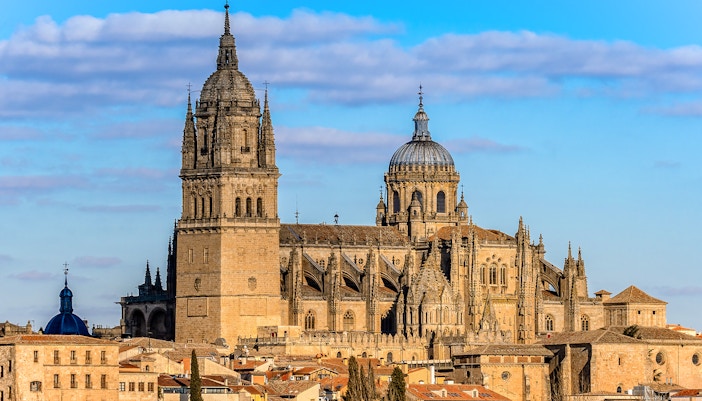
Romanesque roots
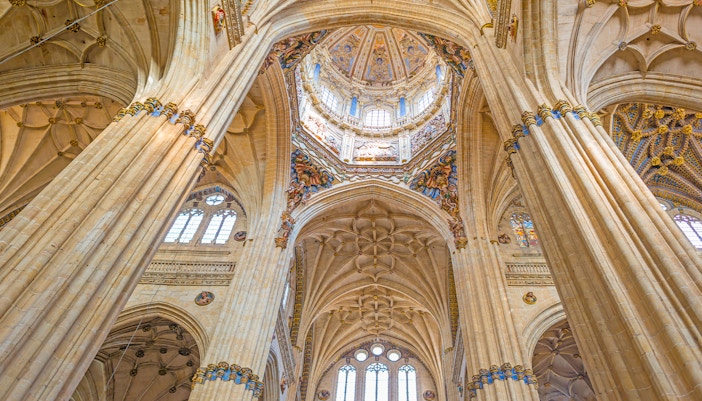
Gothic grandeur
Soaring vaults and pointed arches of the New Cathedral push your gaze heavenward.
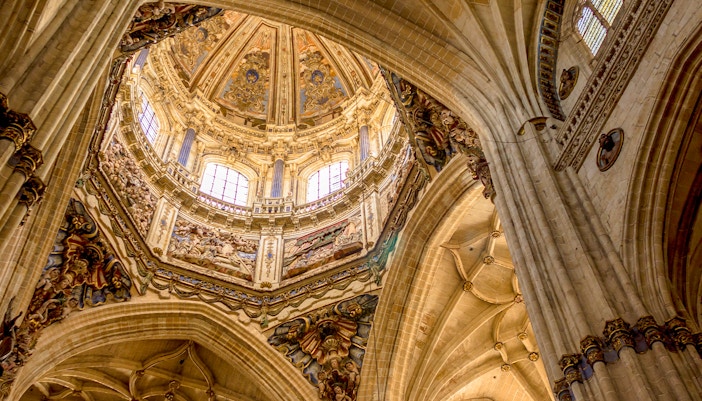
Baroque elements
Later additions added theatrical drama, with curves, spirals, and heavy ornamentation.
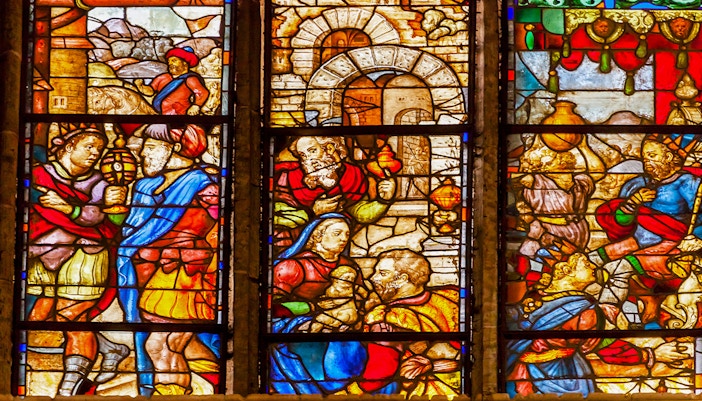
Stained glass magic
Medieval and Renaissance windows flood the interiors with jewel-colored light.
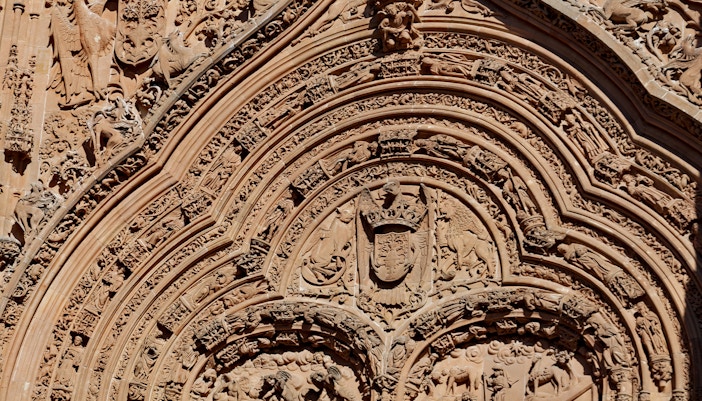
Stone carvings
From floral motifs to playful surprises, the façades double as Salamanca’s stone storybook.
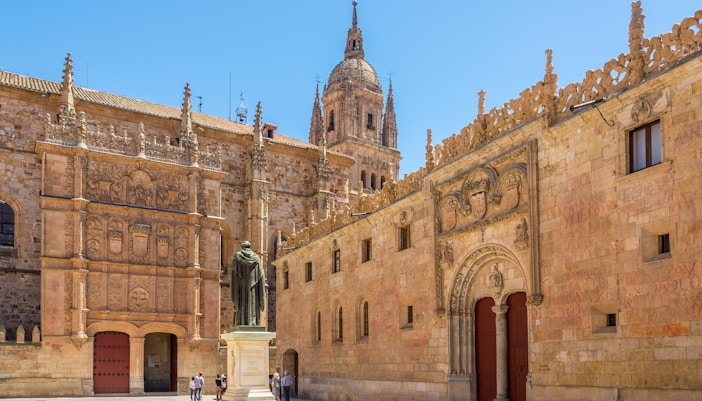
Golden sandstone
The cathedral glows honey-gold at sunrise and sunset, thanks to Salamanca’s iconic sandstone.
Know before you go
- Location: Plaza Juan XXIII, Salamanca, Spain (Map)
- Nearest landmark: University of Salamanca (2-minute walk away)
- Timings: Generally 10am – 8pm (may vary seasonally)
- Closed on: Major festive holidays; check the cathedral site for details
- Last entry: 30 minutes before closing
- Accessibility: Ramps and elevators are added in parts of the New Cathedral; tower climb is not suitable for strollers or people with limited mobility
- Facilities: Restrooms, gift shop, and plenty of nearby cafés
- Allow 1.5–2 hours to explore both cathedrals fully.
- Don’t rush the carvings; finding the astronaut and ice-cream-eating dragon is part of the fun.
- Bring comfy shoes. You’ll be walking and climbing narrow steps if you tackle the bell tower.
- Early mornings or late afternoons mean fewer crowds and the sandstone glowing in magical light.
- Pair your visit with a stroll to the University of Salamanca and Casa de las Conchas for the ultimate golden triangle of Salamanca sights.
Frequently asked questions about Salamanca Cathedral
The astronaut was added during restoration in the 1990s as a modern signature by the stone masons. It’s now one of the cathedral’s most famous photo ops.
Yes. While parts are open to visitors as a museum, religious services continue, especially in the New Cathedral.
When the New Cathedral was planned in the 16th century, instead of demolishing the Old Cathedral, the city decided to preserve it. Today, both stand side by side, making Salamanca unique.
Yes. A single ticket generally grants access to both the Old and New Cathedrals, as well as the tower and museum exhibits.
The cathedral, like much of the old city, is built from Villamayor sandstone, which glows golden in the sunlight and gives Salamanca its nickname “La Dorada” (The Golden City).
The Gothic-Renaissance altarpiece in the New Cathedral is the standout, with intricate panels depicting scenes from the life of Christ and the Virgin Mary.


