Visiting Reina Sofía Museum: your guide
The Reina Sofía Museum is Madrid’s essential modern art museum, best known for Picasso’s Guernica and one of Spain’s strongest collections of Dalí, Miró, and post-war art. The visit is less overwhelming than the Prado, but it’s still spread across multiple wings and floors, so a loose route matters. The biggest mistake is treating Guernica as the whole museum and rushing out after it. This guide covers timing, entrances, tickets, and how to plan a smoother visit.
Quick overview: Reina Sofía Museum at a glance
If you want the visit to feel calm instead of crowded, timing matters more here than people expect.
- When to visit: Monday, Wednesday–Saturday: 10am–9pm; Sunday: 10am–2:30pm; Tuesday: closed. Wednesday or Thursday from 10am–12 noon is noticeably calmer than free-entry evenings, because the Guernica room bottlenecks fast once school groups and after-work visitors arrive.
- Getting in: From €12 for standard entry. Entry + audio guide from €16.50. Book ahead for weekday mornings in spring and fall, while free-entry hours don’t need a paid ticket but usually mean the longest waits.
- How long to allow: 2–3 hours for most visitors. Temporary exhibitions, the Nouvel wing, and anyone who likes lingering with Dalí or Miró will push it closer to 4 hours.
- What most people miss: Picasso’s preparatory material around Guernica, the Juan Gris rooms, and the Nouvel extension galleries that many people skip once they’ve seen the headline works.
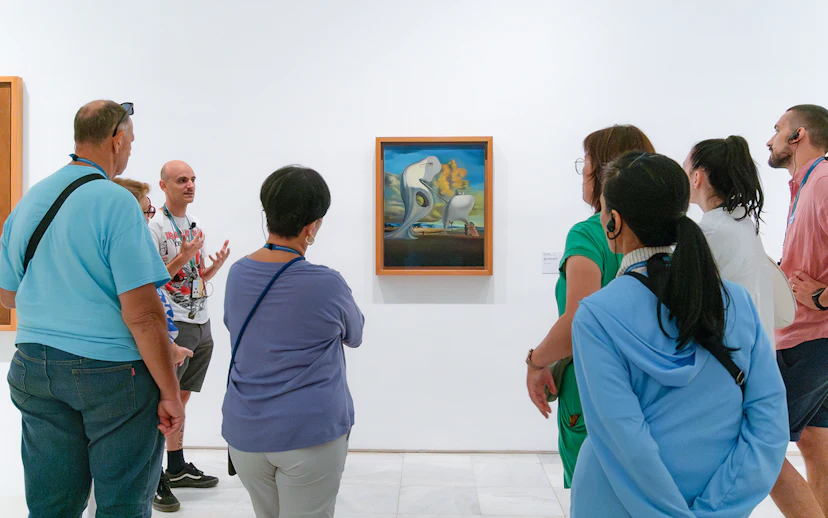
- Is a guide worth it? Yes if you want the political and artistic context around Guernica and Spain’s avant-garde; if you mainly want highlights at your own pace, the audio guide usually does enough for less.
🎟️ Morning slots for Reina Sofía Museum can fill 2–5 days in advance during spring weekends, holiday periods, and major exhibition runs. Lock in your visit before the time you want is gone.
Jump to what you need
🕒 Where and when to go
🗓️ How much time do you need?
🎟️ Which ticket is right for you?
🗺️ Getting around
🖼️ What to see
♿ Facilities and accessibility
🛑 Rules and restrictions
🗒️ Practical tips
🏛️ What else to visit?
🍔 Eat, shop and stay
Where and when to go
How do you get to Reina Sofía Museum?
The museum sits in Madrid’s Atocha area, on the southern end of the Paseo del Arte, a short walk from Atocha station and Estación del Arte metro.
C. de Santa Isabel, 52, 28012 Madrid, Spain
- Metro: Estación del Arte (Line 1) → 4-min walk → Best if you’re coming from Sol, Gran Vía, or central Madrid.
- Cercanías / train: Madrid Atocha → 7-min walk → The easiest arrival if you’re coming in by regional train or airport transfer.
- Bus: Lines 6, 10, 14, 27, 32, 34, 37, and 45 stop near Atocha → 3–6 min walk → Handy if you’re pairing it with the Prado.
- Taxi / rideshare: Drop-off at Calle Santa Isabel or Ronda de Atocha → 1–3 min walk → Best for limited-mobility visitors.
Which entrance should you use?
Most visitors use the Sabatini Building entrance, and the main mistake is arriving during free-entry hours expecting a quick in-and-out for Guernica.
- Main entrance: Located at the Sabatini Building on Calle Santa Isabel 52. Expect 10–20 min wait on regular weekday mornings and 30–45 min during free-entry windows or weekend late mornings.
When is Reina Sofía Museum open?
- Monday: 10am–9pm
- Tuesday: Closed
- Wednesday–Saturday: 10am–9pm
- Sunday: 10am–2:30pm
- Last entry: 30 min before closing
When is it busiest? Friday–Saturday from 11am–2pm and all free-entry periods are the most crowded, with the tightest congestion around Guernica and the Dalí rooms.
When should you actually go? Wednesday or Thursday from 10am–12 noon gives you the clearest run through the Sabatini galleries before school groups and free-entry lines build.
How much time do you need?
| Visit type | Route | Duration | Walking distance | What you get |
|---|---|---|---|---|
Highlights only | Entrance → Guernica → Picasso context rooms → Dalí highlights → exit | 1.5–2 hr | ~1km | You see the museum’s biggest draw and a few key Surrealist rooms, but you’ll skip most of Miró, Juan Gris, post-war art, and temporary exhibitions. |
Balanced visit | Entrance → *Guernica* → Dalí and Miró galleries → Cubism rooms → short stop in Nouvel wing → exit | 2.5–3 hr | ~1.5km | This gives you the strongest version of the museum without museum fatigue, adding the Spanish modern canon beyond Picasso and a taste of the newer extension. |
Full exploration | Entrance → full Sabatini collection route → Dalí, Miró, Gris, and post-war galleries → Nouvel extension and temporary exhibitions → café or bookstore → exit | 4+ hr | ~2km | You get the full story of the collection and the architecture, but it’s a long standing-heavy visit and the later galleries reward stamina more than casual browsing. |
Which Reina Sofía Museum ticket is best for you
| Ticket type | What's included | Best for | Price range |
|---|---|---|---|
General admission | Museum entry + permanent collection + temporary exhibitions | A one-time visit where you want enough time for *Guernica*, Dalí, and Miró without turning the museum into an all-day commitment. | From €12 |
Entry + audio guide | Museum entry + official audio guide app + permanent collection + temporary exhibitions | A first visit where you want context on the key works without committing to a fixed group pace. | From €16.50 |
Two-visit ticket | 2 museum entries within 1 year + permanent collection + temporary exhibitions | A longer Madrid stay where you’d rather split the museum into two shorter visits than rush the Nouvel wing and later galleries. | From €18 |
Reduced admission | Museum entry + permanent collection + temporary exhibitions | A budget-sensitive visit if you qualify as a student under 26, senior 65+, educator, or another reduced-fare category. | From €6 |
Paseo del Arte pass | Entry to Prado Museum + Thyssen-Bornemisza Museum + Reina Sofía Museum | A Madrid museum day where you want all 3 major art museums without buying separate tickets and planning separate checkouts. | From €38 |
How do you get around Reina Sofía Museum?
The museum is spread across 2 connected-but-different experiences: the older Sabatini building for the core collection, and the newer Nouvel extension for temporary shows, public spaces, and visitor amenities. In practice, it is easy to navigate once you pick a building-first route, but surprisingly easy to miss an entire wing if you leave after Guernica.
- Sabatini building: Permanent collection, Guernica, and the main Spanish modern-art galleries → budget 60–90 minutes.
- Upper Sabatini galleries: Dalí, Miró, Gris, and later 20th-century rooms → budget 45–60 minutes.
- Nouvel extension: Temporary exhibitions, library, café, and auditorium spaces → budget 30–60 minutes.
Suggested route: Start in Sabatini if Guernica is your priority, continue upward through Dalí and Miró, and only then cross to the Nouvel wing; most visitors leave too early because the crowd flow pulls them back toward the exit after Picasso.
Museum layout
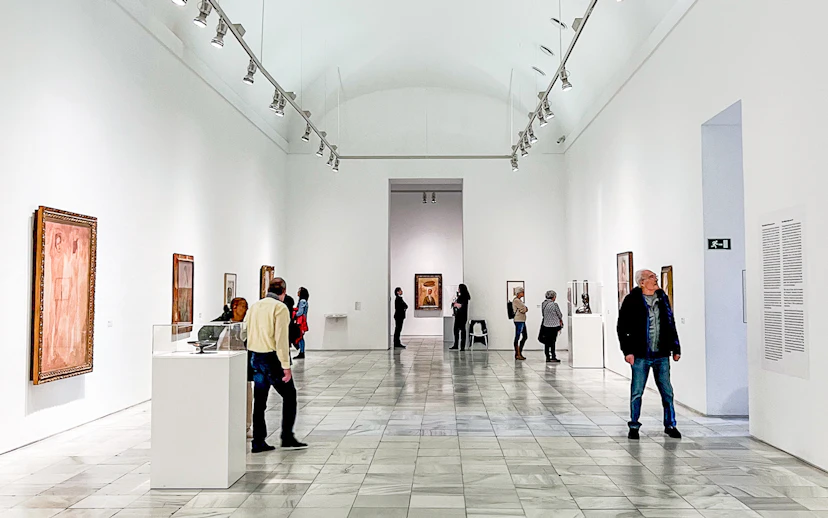
Reina Sofía feels more multi-wing than linear, with the historic Sabatini Building holding the core collection and the Nouvel extension handling later galleries, temporary exhibitions, and public spaces. It’s easy to self-navigate for the highlights, but easy to miss whole sections if you leave after Guernica.
- Sabatini Building, main collection route: Guernica, Civil War context, Cubism, and Surrealism → budget 60–90 min.
- Upper modern galleries: Dalí, Miró, Juan Gris, and later Spanish modernism → budget 45–60 min.
- Nouvel extension: temporary exhibitions, larger contemporary installations, bookstore, library, and café → budget 30–60 min.
Suggested route: start in the Sabatini Building with Guernica before the room gets tight, continue straight into Dalí and Miró while your attention is still fresh, and finish in the Nouvel wing so you don’t double back through the busiest part of the museum.
Maps and navigation tools
- Map: Printed plan and digital map → covers both buildings and collection routes → pick one up at entry or download before arrival.
- Signage: Good between major sections, but the collection story isn’t always intuitive once you move beyond Picasso, so a map genuinely helps.
- Audio guide / app: Multilingual app-based guide → covers major works and collection context → worth it if you want independent pacing with more substance.
💡 Pro tip: Don’t take the glass elevators every time you change floors unless you need them — they attract photo stops and short queues, while the stairs are quicker between the main collection levels.
Where are the masterpieces inside Reina Sofía Museum?

Guernica
Attribute — Artist: Pablo Picasso
This is the reason most people come, and it lands harder in person than in reproduction because of its scale and the way the room is built around it. Slow down long enough to read the surrounding context: most visitors stare at the central canvas, take a photo, and miss the preparatory material that explains how Picasso built the painting’s emotional force.
Where to find it: Sabatini Building, in the museum’s core Picasso and Spanish Civil War galleries.
The Great Masturbator
Attribute — Artist: Salvador Dalí
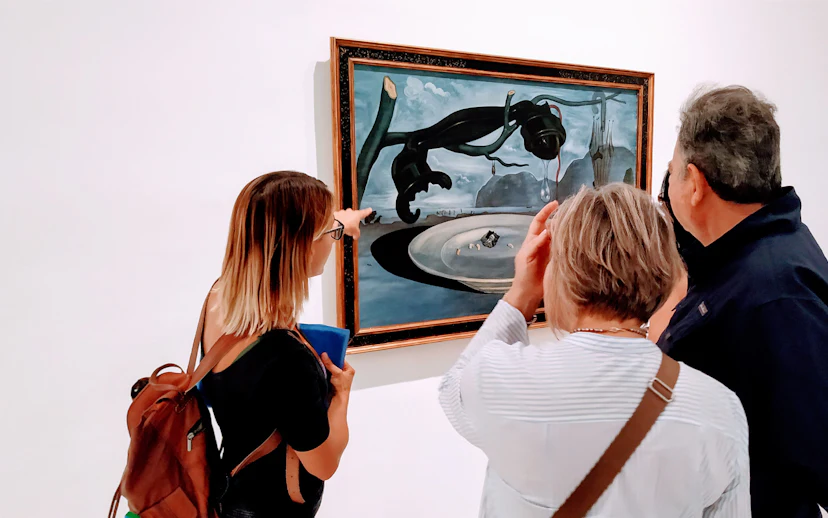
Dalí’s dream logic is on full display here, and it’s one of the works that makes the Surrealist rooms feel richer than a simple Picasso add-on. Most visitors move through quickly after the first strange impression, but the real reward is in the layered symbols and face-like profile that only settle once you stop rushing.
Where to find it: Sabatini Building, in the Surrealism section beyond the main Picasso route.
Miró galleries
Attribute — Artist: Joan Miró
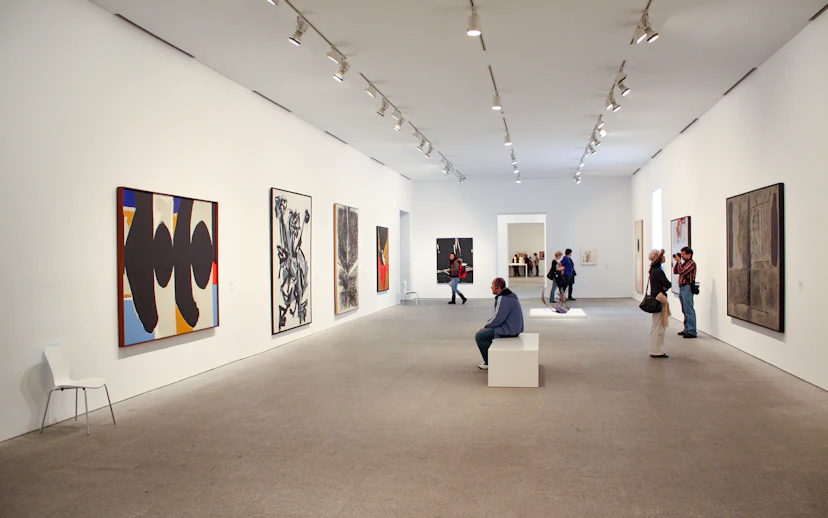
The Miró rooms are where the museum starts to breathe after the intensity of Guernica, with brighter color, sharper graphic forms, and a looser rhythm. Many people treat them as a pass-through on the way to Dalí, but they’re one of the best places to see how Spanish modernism widened beyond war imagery and Cubism.
Where to find it: Upper Sabatini collection galleries, after the main Picasso and Surrealist sequence.
Juan Gris and the Cubist rooms
Attribute — Artist: Juan Gris and Spanish Cubists
These rooms matter because they bridge the leap from early modern experimentation to the more emotionally charged galleries that follow. Most visitors give them too little time because they are rushing toward the star names, but Juan Gris is one of the clearest ways to understand Spain’s place inside Cubism rather than just around it.
Where to find it: Sabatini Building, along the early modern and Cubist collection route before or around the Picasso sequence.
Anthropometry
Attribute — Artist: Yves Klein
This work rewards visitors who stay past the famous Spanish names and keep going into the post-war galleries. It’s easy to miss because the energy of the museum changes here, but that shift is the point: you move from canonical Spanish modernism into a wider international conversation about body, performance, and material.
Where to find it: Later 20th-century galleries in the museum’s broader modern and post-war collection route.
Facilities and accessibility
- 🚻 Restrooms: Restrooms are available inside the museum complex, so you don’t need to leave the site mid-visit for basic facilities.
- 🍽️ Café / restaurant: The museum has an on-site café and restaurant space, which is useful if you want to stay inside the art triangle without breaking your visit.
- 🛍️ Gift shop / merchandise: The museum shop is worth a stop for exhibition catalogs, art books, and better-quality design souvenirs than the usual magnet-heavy mix.
- 📚 Art library: Reina Sofía’s specialist art library is one of the museum’s standout extras, especially if you want to keep reading after the galleries.
- 🪑 Seating / rest areas: There are benches and rest spots through the museum, but the biggest crowd pressure is around Guernica, so plan your longer pause elsewhere.
- 📶 Wi-Fi: Free Wi-Fi is available in the museum, which helps if you’re using the app-based audio guide or pulling up the digital map.
- 💧 Water planning: Bring water for before or after the visit, because the museum experience is long enough that a proper break matters more than people expect.
- ♿ Mobility: The main public route is elevator-served across the Sabatini and Nouvel buildings, but it is still a large museum, and crowding around Guernica can slow movement even on accessible routes.
- 👁️ Visual impairments: The audio guide is the most useful support for visitors who want more than short wall labels, because much of the museum’s value comes from context rather than quick visual recognition.
- 🧠 Cognitive and sensory needs: There are no dedicated quiet hours built into a typical visit, and the loudest points are free-entry evenings, school-group mornings, and the Guernica room.
- 👨👩👧 Families and strollers: Elevators and broad gallery routes make the main path workable with strollers, but the full museum can feel long unless you keep the visit tight and highlight-led.
This museum works best for school-age children, teens, and older kids who can engage with bold visual art rather than lots of hands-on exhibits.
- 🕐 Time: 60–90 min is realistic with younger children if you focus on Guernica, one Dalí room, and one Miró section instead of the full collection.
- 🏠 Facilities: The easiest family rhythm is to use the elevators, keep snack and restroom stops before or after gallery time, and save the longer sit-down break for the café.
- 💡 Engagement: Turn the visit into a visual challenge by asking children to spot animals, distorted faces, and repeated symbols inside Guernica and the Dalí rooms.
- 🎒 Logistics: Bring a small bag, arrive right at opening, and skip free-entry evenings with children because the crowding makes the museum feel harder than it is.
- 📍 After your visit: Retiro Park is the easiest child-friendly decompression stop nearby if everyone needs outdoor space after an indoor art visit.
Rules and restrictions
What you need to know before you go
- Entry requirement: Buy a timed ticket online or at the museum, and carry ID if you’re using a reduced or free-admission category.
- Bag policy: Large bags and luggage are a bad idea here because security slows down fast, and oversized items may need to be checked rather than carried through the galleries.
- Re-entry policy: If you leave mid-visit, plan on another security check on return, so it’s easier to finish your café or bookstore stop before exiting.
Not allowed
- 🚫 Food and drink: Eating and drinking are for café and public areas, not the galleries.
- 🚬 Smoking and vaping: Smoking and vaping are not for indoor museum spaces and should be treated as outside-only.
- 🐾 Pets: Pets are not part of a standard visit, while service animals should follow the museum’s accessibility rules.
- 🖐️ Touching exhibits: Don’t touch artworks, plinths, or barriers, because the museum’s modern collection includes surfaces and materials that are easy to damage.
Photography
Personal photography is generally easiest in the permanent collection when room signage allows it, but flash, tripods, selfie sticks, and any setup that blocks circulation should be treated as off-limits. Rules can change in temporary exhibitions or for specific works, so follow the signs in each room instead of assuming the same policy applies everywhere.
Good to know
- Free-entry hours save money, but they also create some of the longest lines and the most crowded viewing conditions of the day.
- The Guernica room is the tightest point in the museum, so if the center is packed, move to the side walls first and wait for the crowd to shift.
Practical tips
- If you want a paid slot, book 2–5 days ahead for spring weekends and major exhibitions; if you miss your ideal time, shifting to a Wednesday or Thursday morning usually works better than dropping into a free-entry queue.
- Don’t spend all your energy in the first 20 minutes at Guernica. The museum is strongest when Picasso, Dalí, and Miró are seen as one sequence, not as three disconnected stops.
- The calmest visit window is usually right after opening on Wednesday or Thursday, because you’re ahead of school groups, tour traffic, and the after-work free-entry crowd.
- Bring a small bag instead of a large backpack. Security is faster, moving through the galleries is easier, and you won’t resent the museum by hour 2.
- If you only care about Guernica, you can do the visit in about 90 minutes, but if you’ve paid for admission it is worth staying for at least one Surrealist section so the museum doesn’t feel like a one-room stop.
- Eat either before you enter or after your main gallery route. The on-site options are convenient, but breaking too early can make it harder to pick up the museum’s storyline again.
- If you’re doing Madrid’s museum triangle in one day, put Reina Sofía second or third only if your energy for modern art is still good; otherwise, start here while your attention span is sharp.
What else is worth visiting nearby?
Prado Museum
Distance: 900m — 12-min walk
Why people combine them: It’s the clearest same-day pairing in Madrid if you want Spain’s old masters and modern masters in one art-heavy itinerary.
✨ Reina Sofía Museum and Prado Museum are most commonly visited together — and simplest to do on the Paseo del Arte pass. It saves you from buying separate museum tickets and keeps the whole art triangle in one plan.
Thyssen-Bornemisza Museum
Distance: 1.2km — 15-min walk
Why people combine them: It fills the gap between the Prado and Reina Sofía, so the 3 museums together create a full timeline from medieval painting to Pop Art.
Also nearby
CaixaForum Madrid
Distance: 400m — 5-min walk
Worth knowing: It’s an easy cultural add-on for temporary exhibitions and the vertical garden facade, especially if you want something lighter after a full museum visit.
Retiro Park
Distance: 1km — 12-min walk
Worth knowing: It’s the best reset nearby if you’ve spent 2–4 hours indoors and want open space, shade, and a slower end to the day.
Eat, shop and stay near Reina Sofía Museum
- On-site: Arzábal at Museo Reina Sofía, C. de Santa Isabel, 52: Spanish plates, mid-range to upscale, worth it if you want a proper sit-down meal without leaving the museum zone.
- El Brillante (8-min walk, Plaza del Emperador Carlos V, 8): Classic Madrid bar, budget to mid-range, best if you want a fast and famous calamari sandwich near Atocha.
- Bodega de los Secretos (6-min walk, C. de San Blas, 4): Spanish cuisine, mid-range, a good post-museum dinner option if you want atmosphere rather than speed.
- Taberna Más Al Sur (10-min walk, C. de Santa Isabel, 35): Tapas and Mediterranean plates, budget to mid-range, reliable if you want a casual meal close to the museum.
- Pro tip: If you’re visiting on a weekend, eat before 1:30pm or after 3:30pm, because the whole Atocha and museum strip gets crowded at standard Spanish lunch hours.
- La Central at Museo Reina Sofía: Art books, exhibition catalogs, and design gifts inside the museum complex, making it the smartest stop for a souvenir that still feels tied to the visit.
- Cuesta de Moyano bookstalls: Secondhand and illustrated books along Calle Claudio Moyano, about 15 min away on foot, and a better browse if you want something more local than a museum shop.
Staying near Reina Sofía works well if you want Madrid’s museum triangle on your doorstep and fast transport through Atocha. It is practical rather than dreamy: you get convenience, walkability, and decent hotel choice, but the area feels more transit-and-culture focused than neighborhood-pretty. For a short cultural trip, that trade is usually worth it.
- Price point: The area skews mid-range, with some upscale options near the museums and better-value stays once you edge toward Lavapiés.
- Best for: Short stays where you want to walk to Reina Sofía, the Prado, Atocha, and Retiro without spending time on the metro.
- Consider instead: Barrio de las Letras suits longer stays if you want more evening atmosphere, while Salamanca is a better fit if you want quieter streets and more polished hotels.
Frequently asked questions about visiting Reina Sofía Museum
Most visits take 2–3 hours, though a full museum route with temporary exhibitions can stretch to 4 hours. If you only want Guernica and a few headline galleries, you can do it in about 90 minutes, but the museum feels much richer once you add Dalí, Miró, and at least part of the Nouvel wing.
Yes, booking ahead is the safer choice for paid morning visits, especially in spring, fall, and during big exhibition runs. Free-entry windows don’t require a paid ticket, but they usually come with the longest queues, so advance booking is more about controlling your time than simply guaranteeing entry.
Yes, it can be worth it when you’re visiting on a weekend, during a major temporary exhibition, or if you only have a tight Madrid museum day. The biggest time savings come from avoiding free-entry-hour bottlenecks and the late-morning crush, not from bypassing every step of security.
Arrive about 15–20 minutes early for a paid timed slot. That gives you enough buffer for security, orientation, and picking up a map without turning the first room into a rush, and it matters most if you want to reach Guernica before the gallery gets crowded.
Yes, you can bring a small day bag or backpack, but large bags are a bad idea. They slow down security, make the crowded galleries more frustrating, and may need to be checked if they are oversized or treated as luggage.
Yes, personal photography is often possible in permanent galleries when room signage allows it, but flash, tripods, and selfie sticks should be treated as off-limits. Temporary exhibitions or specific works can have stricter rules, so always follow the signs in each room instead of assuming one museum-wide policy.
Yes, the museum works well for small groups and organized tours, especially if you want help with the historical context around Guernica and Spanish modernism. The only downside is that the busiest rooms can feel tight, so groups do best with an early slot rather than free-entry evening hours.
Yes, but it suits school-age children and teens better than very young kids. A 60–90 minute highlights route focused on Guernica, one Dalí room, and one Miró section works far better for families than trying to cover the full museum in one go.
Yes, the museum’s main public route is accessible by elevator across the Sabatini and Nouvel buildings. The honest limitation is not the building layout so much as crowd density, because the Guernica room and free-entry periods can slow movement even on otherwise accessible routes.
Yes, there is food on-site, and the museum also sits in one of Madrid’s easiest areas for quick pre- or post-visit meals. If you want convenience, stay on-site; if you want better value or a faster stop, the Atocha and Santa Isabel area has several solid options within 5–10 minutes.
Free entry is usually offered on Monday and Wednesday–Saturday from 7pm–9pm, and on Sunday from 12:30pm–2:30pm. These hours are great for budget travelers, but they are usually the worst choice if you want a quiet, reflective view of Guernica.
Don’t miss the Dalí and Miró galleries, because they stop the museum from feeling like a one-work attraction. If you have another 30–45 minutes, add the Juan Gris rooms or a temporary exhibition in the Nouvel wing, which many visitors skip once they’ve seen Picasso.