Why is the Atlético Madrid Stadium a must-visit attraction?

Step inside the Atlético Madrid Stadium and you feel the rhythm of Spanish football instantly. Every corridor echoes with chants, every seat frames the pitch like a theatre stage, and every display tells a story of resilience and glory.

This venue offers more than architecture and capacity. It delivers atmosphere. The steep stands pull fans close to the action, creating one of the most intense matchday environments in Europe. Even without a game, the arena makes you feel like you’re in the thick of the action, almost letting you envision what the matchday energy is like.

The Territorio Atleti museum elevates the visit further. Trophies shine under dramatic lighting, and historic jerseys trace the club’s evolution over its illustrious 120-year history. Multimedia exhibits place you inside legendary moments, from title wins to European nights that shaped Atlético’s identity.

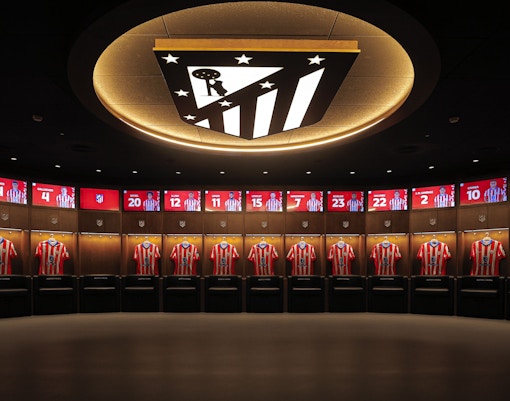
Football lovers walk the players’ tunnel, sit in the dugout, and step into the dressing room where pre-match rituals unfold. Casual visitors enjoy panoramic views, sleek design, and a deeper understanding of Madrid’s sporting culture.

The Atlético Madrid Stadium stands as a symbol of modern football heritage. It respects tradition while embracing innovation. Whether you support Atlético or simply love the game, this arena delivers a powerful and immersive experience that lingers long after you leave. If nothing else, you get to step into Spain’s second-largest football stadium, which is an impressive feat in itself.

Book Atlético de Madrid Stadium tickets
Key highlights you’ll see at the Atlético Madrid Stadium

The pitch and stands

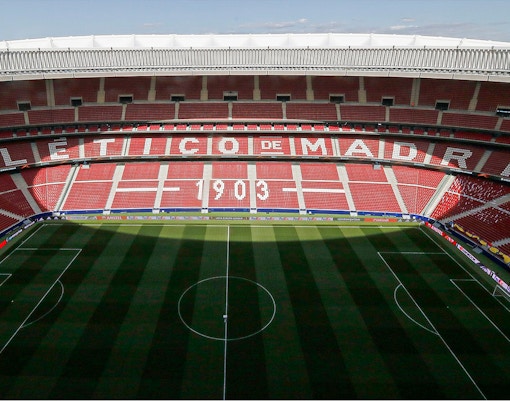
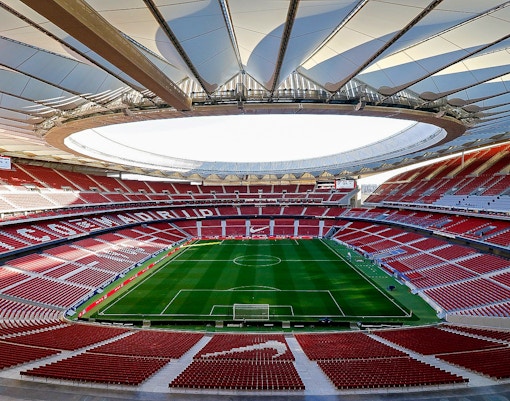
The bowl-like design surrounds the pitch with uninterrupted sightlines and steep seating angles. Every section feels close to the action, recreating the intensity of a packed matchday even during quiet tour hours.

The changing room

Rows of personalised lockers, tactical boards, and recovery areas reveal where players prepare mentally and physically before stepping onto the field. Step inside, and you sense the pre-match tension instantly.

The players’ tunnel

Walk the same tunnel players use on matchday. Crowd noise builds through surround sound, recreating the electrifying moment before entering the pitch under stadium lights.

The dugouts

Sit where coaches direct tactics and substitutes await their chance. From here, you understand how close decision makers stand to the drama unfolding on the field.

Presidential box and VIP areas

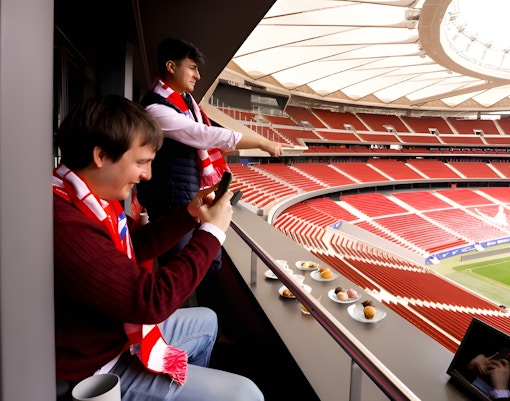
Elegant interiors, premium seating, and panoramic views showcase the stadium’s luxury side while offering a unique perspective on elite football hospitality.

Press conference room

This space hosts post-match reactions and global media moments. Sit behind the desk and imagine answering questions after a decisive victory.

Territorio Atleti museum

Interactive exhibits, historic trophies, and immersive projections chart Atlético Madrid’s journey from humble beginnings to European contenders, celebrating players, fans, and defining matches.

Panoramic views from the upper tier

Climb to the highest rows for sweeping views of the entire arena. The roof structure and lighting system reveal the stadium’s architectural precision.

Brief history of the Atlético Madrid Stadium

Atlético Madrid moved to the new stadium in 2017, beginning a new chapter after decades at Vicente Calderón. The club transformed the former Olympic stadium site into a football-specific arena that matched modern UEFA standards.

The venue quickly gained global recognition by hosting the 2019 UEFA Champions League Final. This event confirmed its status among Europe’s elite stadiums.

Since opening, the stadium has served as a fortress for Atlético Madrid, reflecting the club’s identity built on resilience, unity, and passionate support. It also hosts concerts, international matches, and major sporting events, strengthening its role in Madrid’s cultural landscape.

Who built the Atlético Madrid Stadium?

Architects Antonio Cruz and Antonio Ortiz designed the Atlético Madrid Stadium, combining functionality with bold visual identity. Their work focused on sightlines, acoustics, and fan proximity. The design ensures every seat feels connected to the pitch while maintaining structural elegance.

Architecture of Atlético Madrid Stadium

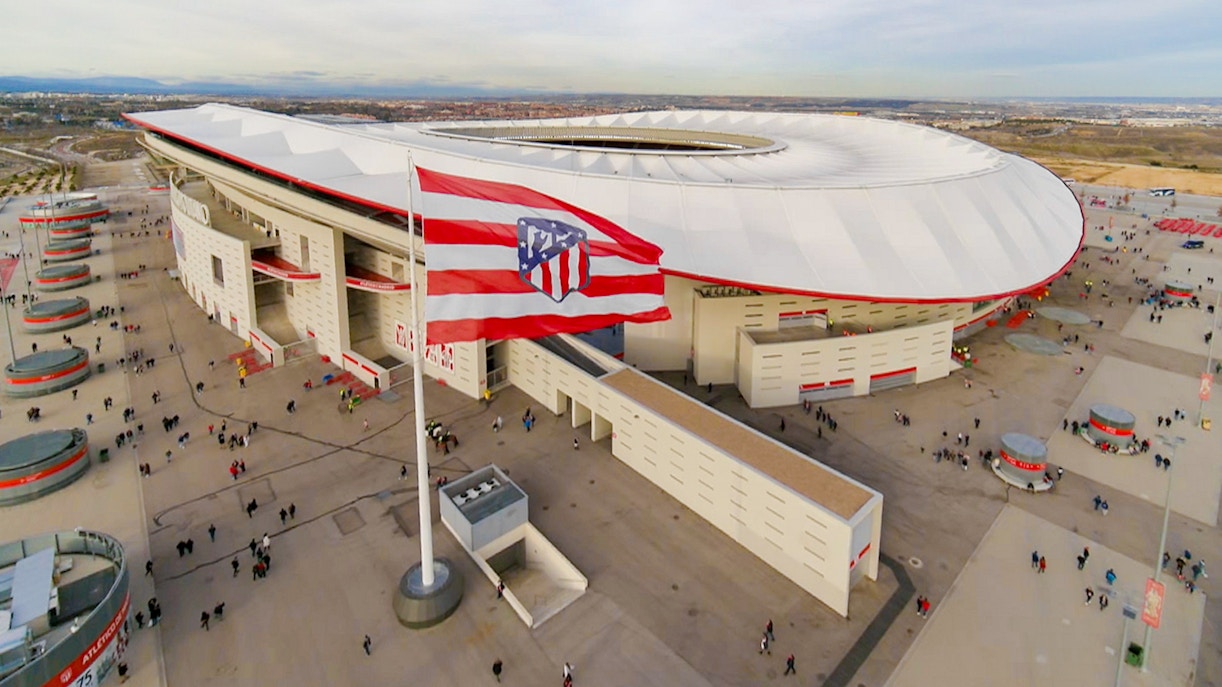
The Atlético Madrid Stadium showcases contemporary stadium architecture with a continuous oval bowl and a lightweight roof that covers every seat. The façade features perforated panels that glow in club colours through an advanced LED lighting system.

Engineers prioritised acoustics and visibility. Steep stands bring supporters closer to the pitch, amplifying chants and creating an intimidating atmosphere for visiting teams. Wide concourses allow smooth crowd movement while maintaining clear views of the field.

The roof structure uses a tensioned cable system that appears to float above the seating bowl. This design reduces visual obstruction and enhances the arena’s sleek profile. Sustainable elements include efficient lighting and improved transport connectivity, aligning the stadium with modern environmental standards.

Frequently asked questions about Atlético Madrid Stadium

The Atlético Madrid Stadium stands in eastern Madrid at Avenida de Luis Aragonés. Its address is Av. de Luis Aragonés, 4, San Blas-Canillejas, 28022 Madrid, Spain | Find on Google Maps. You can reach it easily by metro, bus, taxi, or car, with dedicated transport planning on matchdays.