Everything you need to know about the Reina Sofia Museum in Madrid

Quick Information

ADDRESS

C. de Sta. Isabel, 52, 28012 Madrid, Spain

Timings

Closed today

NUMBER OF ENTRANCES

3

Did you know?

The museum’s main building was originally the 18th-century Sabatini Hospital, later transformed into a modern art space.

Picasso’s Guernica, the museum’s star attraction, measures over 11.5 feet tall and 25 feet wide—far larger than most visitors expect.

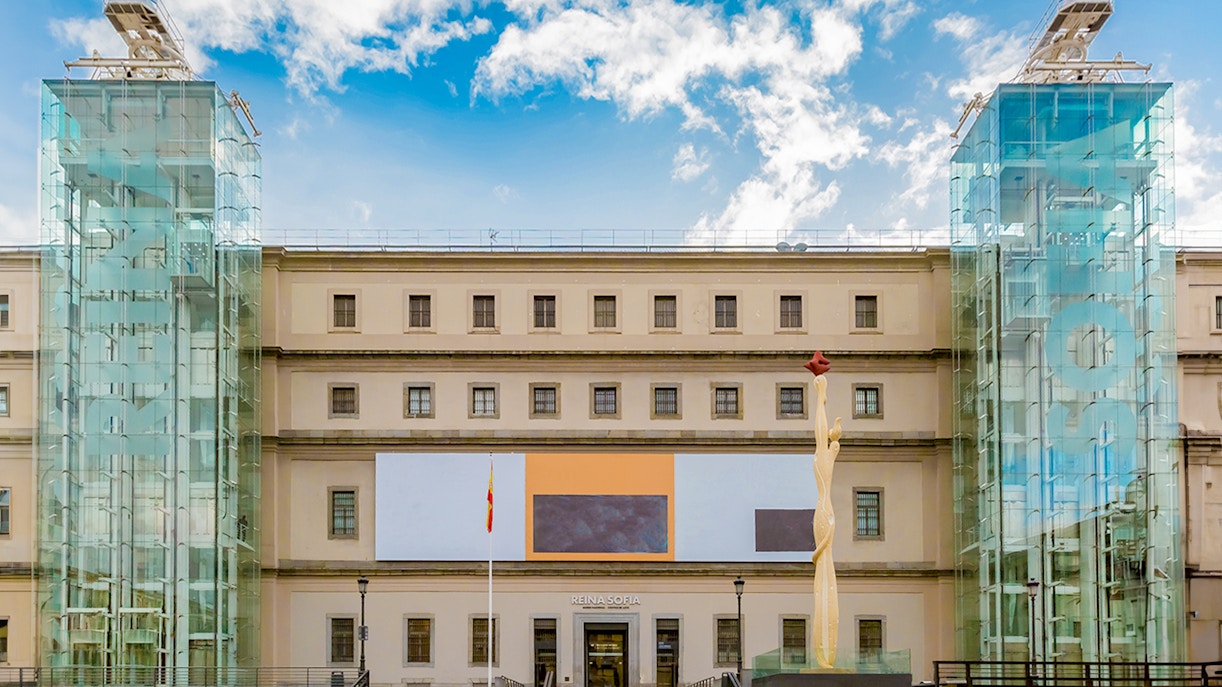
The Jean Nouvel extension, added in 2005, features three striking glass elevator towers and a triangular steel-and-glass atrium.

Why is the Reina Sofia Museum a must-visit attraction? 

If you’re in Madrid and only have time for just one modern-art stop, the Reina Sofía should be it. This landmark tells you the story of how Spanish art met the world in dramatic, revolutionary ways.

Wandering through its halls, you’ll feel the energy of innovation: from the impact of war and politics, to surreal dreams, pop-culture reflections, and global dialogues. The star work, Picasso’s Guernica, alone is worth your time, but what makes the experience richer is the way it’s contextualised. You’ll move from the emotional intensity of that painting to rooms filled with abstraction, beyond the canvas into film, photography, installation, and mixed media.

The architecture itself is part of the experience. You’ll enter historic vaults once built as hospital wards, then move into dazzling modern wings by the French architect Jean Nouvel (part of the 2005 expansion) with dramatic glass, steel, and bold color punctuating the old structure.

What you’ll see at the Reina Sofia Museum

Placeholder Image Headout Blimp
1/5

The museum’s permanent collection

Start your visit in the heart of the collection, with rooms dedicated to Spanish 20th-century art. Expect to see large canvases, bold cut-outs, and emotional shifts in style from cubism to abstraction to spoken-word-influenced installations.

Picasso’s Guernica

The key highlight of the museum is Picasso’s Guernica, a painting depicting the Spanish Civil War that captured the anti-war sentiment of the time. Located in Room 205.10, this monumental piece anchors the museum’s narrative. Surrounding it, you’ll also find Picasso’s preparatory sketches and studies, revealing the artist’s process and the evolution of his masterpiece.

Paintings by other major artists

The Reina Sofía is also a showcase of Spain’s most influential modernists. Discover works by Salvador Dalí, Joan Miró, Juan Gris, Julio González, and Antoni Tàpies, among others. Together, they illustrate the diverse directions of Surrealism, Cubism, and abstract expression that shaped Spanish modern art.

International and thematic galleries

Beyond Spain, the museum takes you on a global journey: Latin-American voices, the international avant-garde, and emerging artists working today. The artists represented here include René Magritte, Vasily Kandinsky, and the well-known Francis Bacon.

Temporary exhibitions and projects

This museum doesn’t rest on its laurels. Check the schedule for bold new installations, performances, film series, and rotating shows. It keeps the collection fresh and offers return visitors something new.

Key highlights of the Reina Sofia Museum

Picasso’s Guernica

Pablo Picasso’s Guernica (1937) is the museum’s crown jewel. It’s a massive anti-war masterpiece capturing Spain’s pain, politics, and power through abstract, fractured forms.

Dalí’s dreamscapes

Salvador Dalí’s surrealist works, like The Great Masturbator and Figure at the Window, dive into the subconscious with dreamlike precision.

Miró’s playful abstractions

Joan Miró’s bold, whimsical canvases burst with color and cosmic symbols, representing Spain’s joyful and poetic approach to modern abstraction.

Jean Nouvel expansion

The museum’s 2005 Jean Nouvel extension adds sleek red roofs, glass facades, and dynamic open spaces. The modern design complements its historic architecture perfectly.

The Sabatini Building

Originally an 18th-century hospital designed by Francesco Sabatini, this stately granite building now anchors the museum’s main galleries and historic core.

Contemporary art wing

From Latin American movements to experimental installations, the Nouvel Wing showcases living artists redefining art, politics, and identity in the 21st century.

Sculpture courtyard

The peaceful courtyard blends open sky and sculpture, featuring works by Calder and Chillida. It’s the perfect space for reflection between exhibits.

The Reina Sofía Library

One of Europe’s best modern art libraries, it houses over 100,000 books, rare archives, and multimedia resources for researchers and enthusiasts alike.

Brief history of Reina Sofía Museum

Woman observing art at Reina Sofia Museum, Madrid, with Spanish flag visible outside.

The building you see began life as the Hospital General de Madrid, a neoclassical complex from the 18th century designed by architects such as José de Hermosilla and Francesco Sabatini. By the 1980s, the historic structure was reimagined for a new purpose: to serve as a cultural landmark

In 1988, a royal decree transformed the former hospital into a national museum, and on September 10, 1992, it officially opened as the Museo Nacional Centro de Arte Reina Sofía. The museum continued to evolve with many major expansions, including the 2005 addition by Jean Nouvel, allowing the institution to grow from its historic roots into a cutting-edge modern art centre.

Architecture of Reina Sofía Museum

Reina Sofia Museum exterior in Madrid, Spain, with modern glass towers.

The architecture of the museum tells a layered story. It begins with the neoclassical hospital architecture, which was plain, sturdy, historically utilitarian, and ends in glass, steel, bright colours, and sweeping modern spaces. The contrast between old and new is deliberate and purposeful, and you are always aware of stepping through history into the present.

The Jean Nouvel wing (inaugurated in 2005) expanded the museum’s area by over 60% and introduced a triangular-shaped floor plan, bold red roofing, and dramatic glazed facades. The older Sabatini building retains a granite façade and vaulted interiors, which evoke the hospital's past and anchor the museum socially and historically.

Frequently Asked Questions about the Reina Sofía Museum

The Reina Sofia Museum was inaugurated on September 10, 1992.