Alcázar of Toledo: Where Rome, Renaissance and Civil war history collide
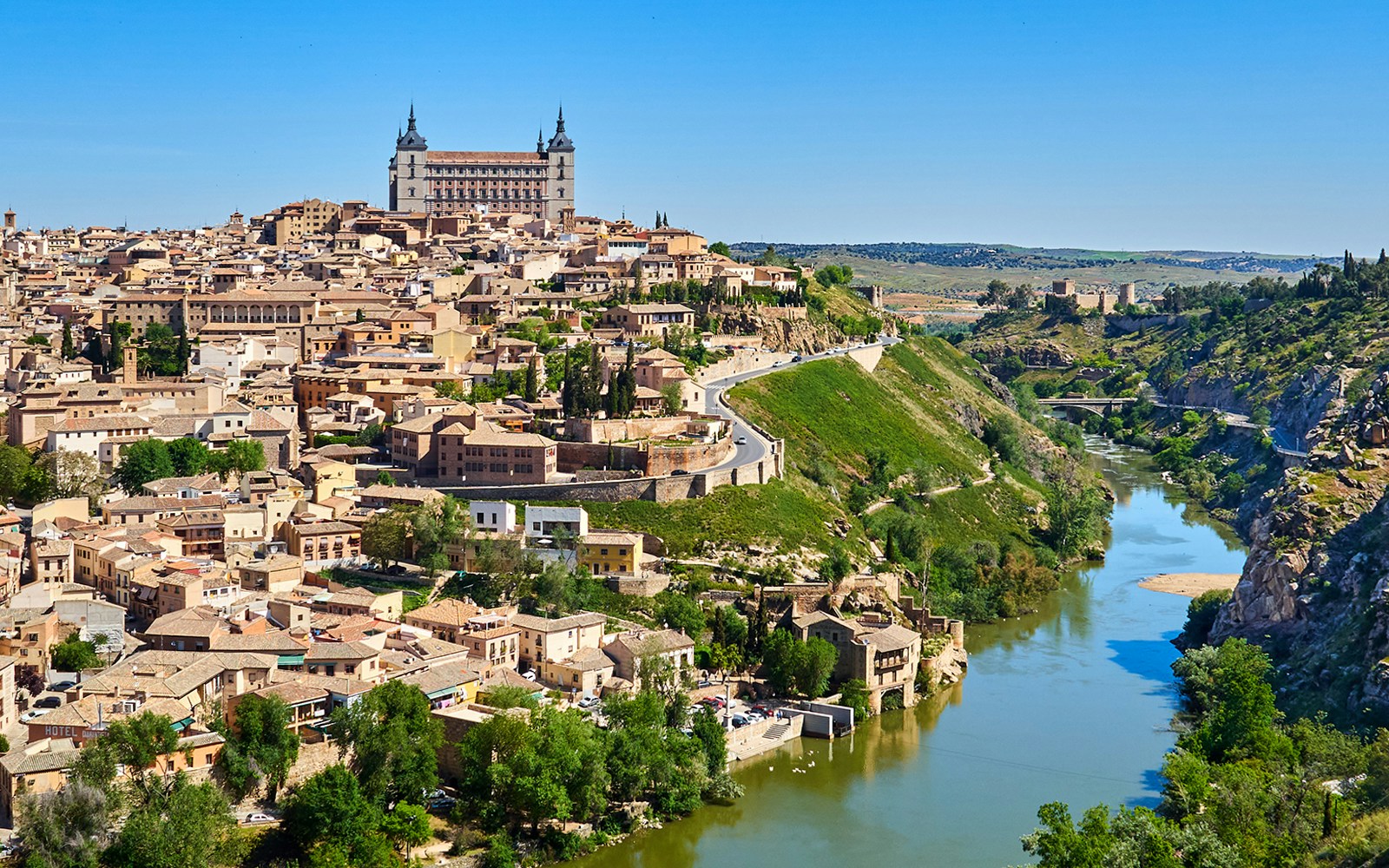
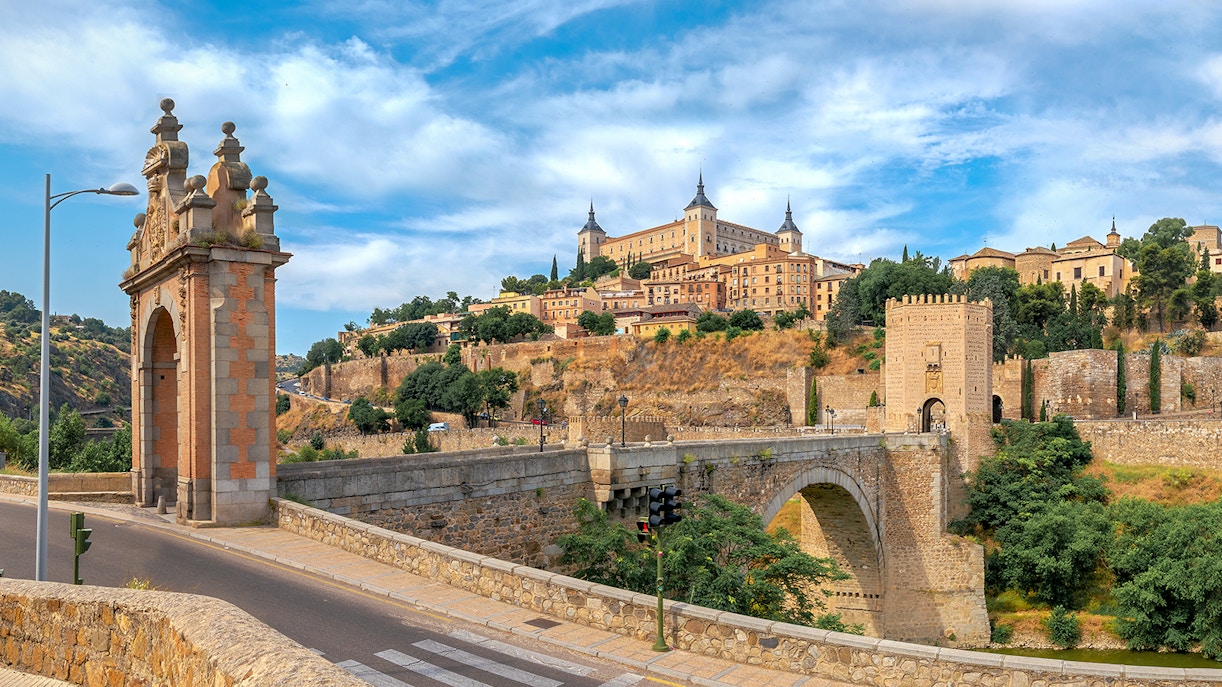
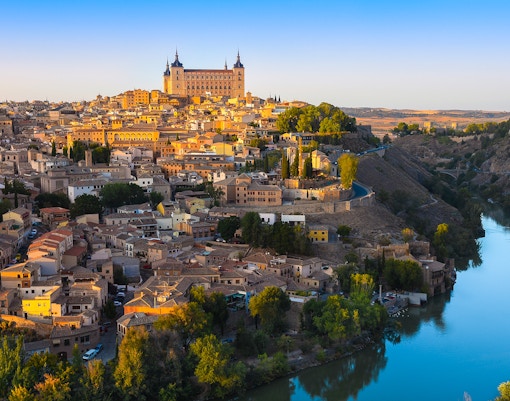
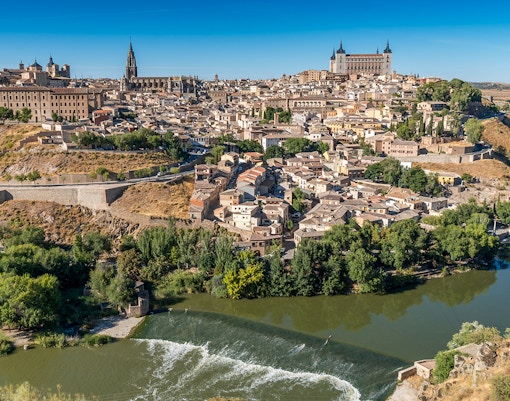
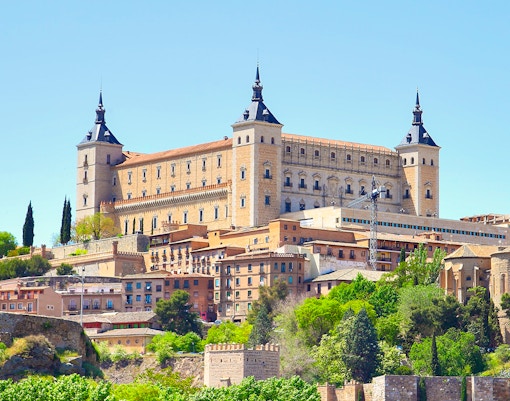
Perched high above Toledo’s ancient streets, the Alcázar of Toledo is a living record of Spain’s layered history. Once a Roman stronghold, later a royal palace and a Civil War battleground, this imposing landmark has seen empires rise and fall. In this article, you’ll find everything you need to explore it, from its deep-rooted past to the must-see highlights inside and tips to plan your visit seamlessly.
What to see inside the Alcázar of Toledo
1/5
Museo del Ejército (Army Museum)
This is more than a military museum. With centuries of Spanish history on display, the exhibits range from medieval armor and royal swords to 20th-century propaganda and peacekeeping missions.
Civil war exhibit
One of the most emotionally charged parts of the museum. You’ll find personal letters, weapons, photographs, and even reconstructed rooms that tell the harrowing story of the 1936 siege from inside the walls.
Grand courtyards & staircases
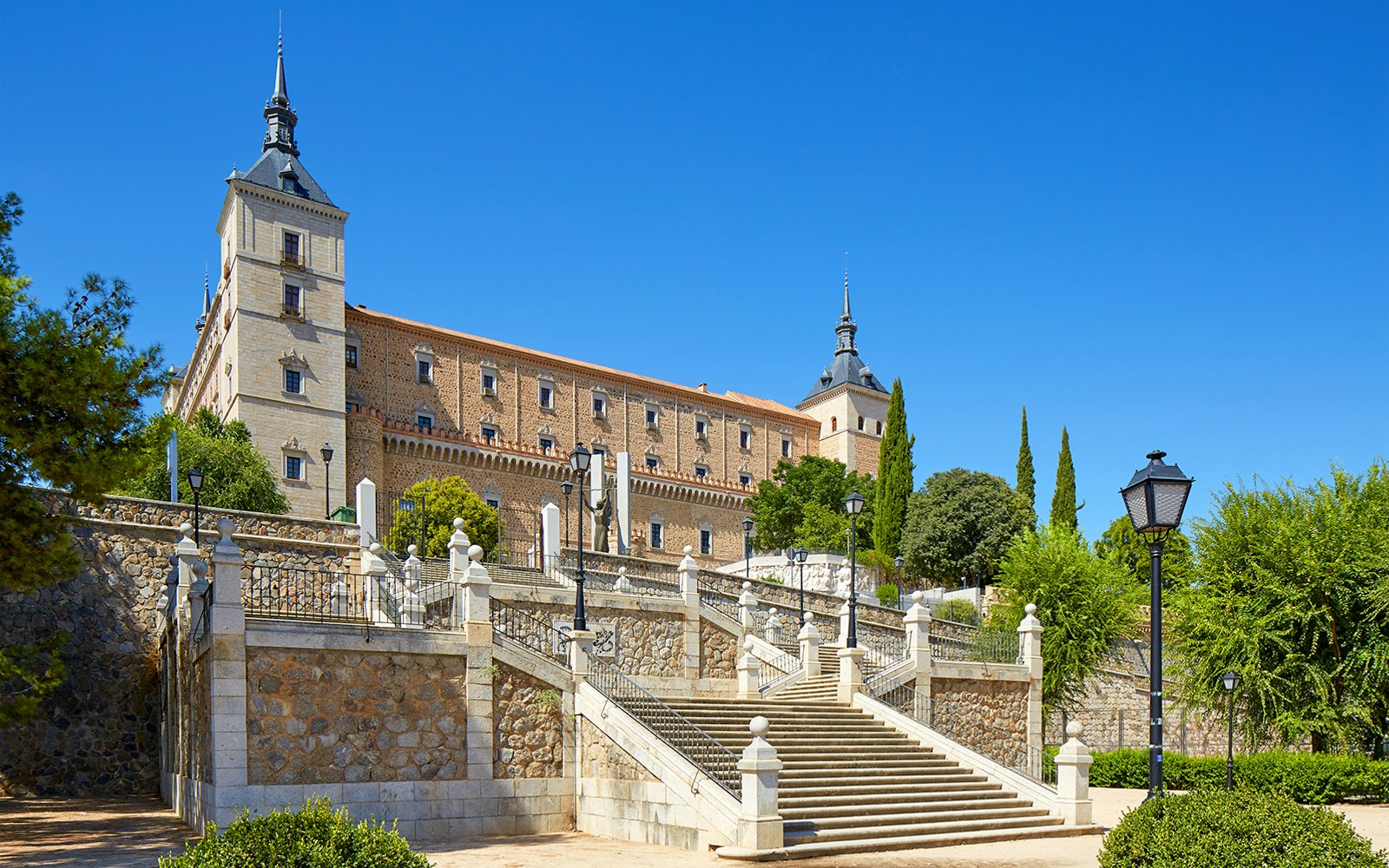
As soon as you walk in, you'll see large open courtyards that feel grand and elegant. They were built to impress visitors. The wide staircases inside remind you that this place was once meant for royalty, especially during the time of Emperor Charles V.
Top-floor panoramic views
The views from the Alcázar’s upper floors are worth the visit alone. You’ll see the Tagus River curling around Toledo, the cathedral spire rising from the city center, and the surrounding plains stretching into the horizon.
Temporary exhibits & special collections
Depending on when you visit, you might catch rotating exhibitions covering everything from Spanish colonial history to modern peacekeeping missions. They add nuance and freshness to the permanent collection.
Planning your visit: hours, tickets & tips
Open: Tuesday to Sunday, from 10am to 5pm
Closed: Mondays, January 1 & 6, May 1, December 24, 25 & 31
Note: Last ticket sold 30 minutes before closing. Exhibition halls close 15 minutes before the museum closes.
Location: C. de la Paz, s/n, 45001 Toledo, Spain (Find on Maps)
By walk: Centrally located near Plaza de Zocodover and Toledo Cathedral. Streets like Calle de la Unión and Corralillo de San Miguel lead straight to it.
Public transport: City buses (L1, L3, L5, L10, L12, L27, etc.) stop nearby at Calle de la Unión or Zocodover. Expect a short uphill walk from there.
Taxis: No Uber, but local taxis (Servi Taxi Toledo, Taxi Tomás Rufo Pinilla) are reliable and you can book them online or by phone.
Time your visit early in the day to avoid crowds and maximize daylight for rooftop views.
Allow at least 1.5 to 2 hours if you like diving into exhibits or taking photos.
Don’t skip the Library of Castilla-La Mancha, also housed in the Alcázar. It’s underrated with one of the best skyline views in the city.
Quick history of Alcázar of Toledo
Roman beginnings (3rd century CE)
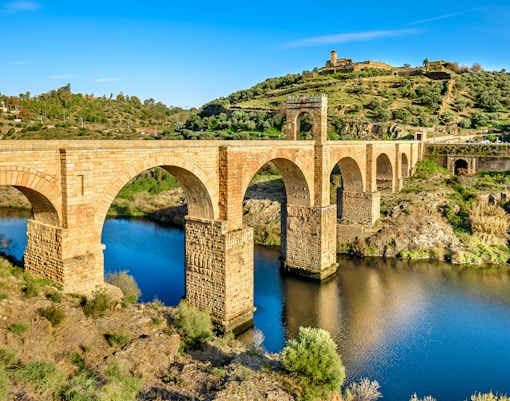
The story of the Alcázar begins with the Romans, who built a fortress here to oversee the strategic Tagus River crossing. This early stronghold laid the groundwork, both literally and politically for everything that followed.
Visigothic & Islamic eras (6th–11th centuries)
As Toledo changed hands, so did the Alcázar. Visigothic rulers used it as a royal residence, while later Muslim governors integrated the structure into their fortified city. Each left their imprint in the form of walls, arches, and layered urban planning.
Christian rule & Renaissance transformation (11th–16th centuries)
Following the Christian reconquest, the Alcázar became a symbol of power for Castilian kings. In the 16th century, Emperor Charles V remodeled it into a grand Renaissance palace — symmetrical, stately, and befitting an empire.
Siege of 1936: Civil War Icon
The most defining moment came in the Spanish Civil War when Nationalist forces withstood a 70-day siege inside the Alcázar. Heavily damaged but never surrendered, it became a symbol of endurance.
Frequently asked questions on Alcazar of Toledo
The Alcázar is most famous for its role in the Spanish Civil War, particularly the 70-day siege in 1936 that turned it into a powerful national symbol of resistance. Historically, it has served as a Roman palace, royal residence, and military fortress making it a landmark packed with layers of Spanish history.
Plan to spend at least 1.5 to 2 hours here. The Army Museum has extensive exhibits, and the building itself with its courtyards, staircases, and panoramic views deserves time to explore. History buffs might easily spend longer.
Inside, you’ll find the Army Museum, which covers everything from medieval armor and Napoleonic campaigns to the Spanish Civil War. Don’t miss the Civil War exhibit or the top-floor viewpoints that offer some of the best views in Toledo.
Yes, but with some caveats. The museum is informative and well-organized, though younger children may not find all sections engaging. Families with older kids or teens interested in history will likely find it meaningful.
The Alcázar is located at the highest point in Toledo’s historic center. From the train station, you can either walk uphill (about 20–25 minutes) or take a city bus (like L5 or L12) to Zocodover, which is a short walk from the Alcázar. Taxis are also a convenient option.
Yes, it's recommended to purchase tickets in advance, especially during peak travel seasons. Several full-day trips from Madrid include entry tickets and guided access to major attractions in Toledo. Notably:
Toledo, Segovia & Ávila Full-Day Trip – Includes tickets to key landmarks in all three cities, offering a comprehensive cultural experience.
Toledo & Segovia Full-Day Trip – Covers entry to major historical sites in both Toledo and Segovia, perfect for those with limited time.